
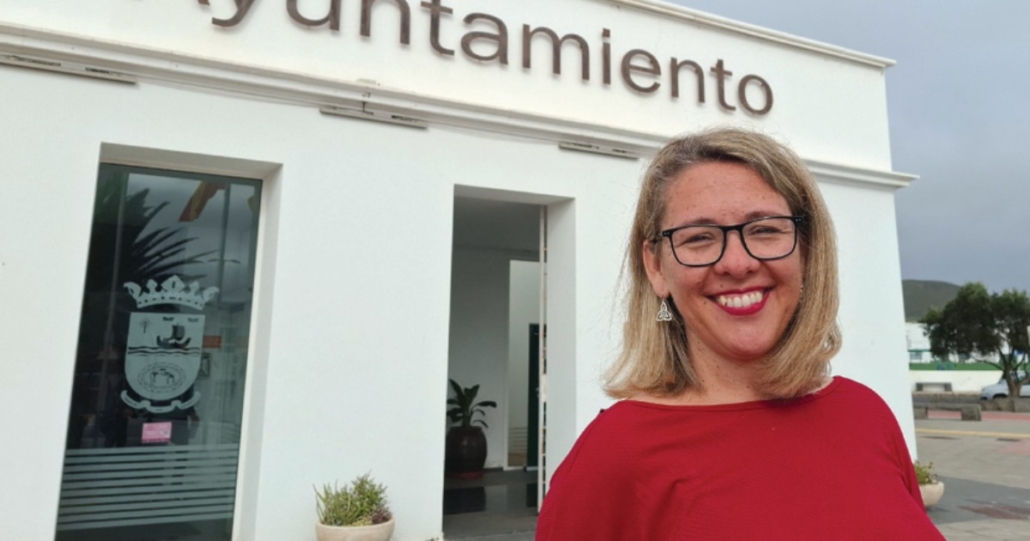
Carnival and St. Patrick’s Day will fill the streets this spring, but on Lanzarote, smaller celebrations take place all year round. We met Miriam Hernández at Tías Ayuntamiento to chat about this important aspect of the island’s cultural life.
Thanks for making time to see us, Miriam. It must be a busy time for you, with carnival preparations and St. Patrick’s Day.
It is, although St Patrick’s Day isn’t part of my responsibilities. It’s mainly funded privately by Irish-owned businesses, and the Tourism Department take charge of it. There are a number of events like this, where we’ll offer support and help, but we don’t take charge.
Carnival is a lot of work, but at the moment much of my time is spent meeting local groups who want to arrange smaller local fiestas later on in the year.
How many of them are there?
I’ve never counted, but there are several. We usually have a preliminary meeting with a group of representatives from the village, where they make their requests, and there are usually a couple more meeting to finalise the arrangements.
When do fiestas happen?
Each fiesta is associated with the feast day of the saint or virgin that is the patron of the town or village. For example, in La Asomada it’s St. Joseph, while Puerto del Carmen celebrates the Virgin of Carmen. They’re often in summer, but here in Tías we have the fiestas of La Candelaria very early in the year.
The date isn’t always important – the reason why the fiestas in Puerto del Carmen take place at the beginning of August, when other places celebrate them in late July, is because the fishermen of the village were usually at sea until the end of July.
What are the elements of a fiesta?
The fiestas usually take place in a social centre in the town or village. Often there’s a marquee, and locals usually operate a ventorrillo – a stall which serves drinks and food.
Each fiesta is different, but they also have many things in common. One of the most popular events is cards tournaments, where games like Canarian envite, ronda and chinchón are played. They’re popular events, where people of all ages get together and have fun. I think they’re lovely.
There are different foods served at all the fiestas, too. There’s usually a big event where they serve portions free of charge. At San Juan celebrations they grill sardines, at La Asomada and Conil they serve chops, Masdache is paella and in Mácher they barbecue jareas (wind-dried fish).
Some fiestas have a romería, which is a pilgrimage involving a walk that everyone does together. People wear traditional dress and there’s always an excited atmosphere. The pilgrimage ends at the church, where the image of the saint or virgin is honoured.
Last year, we revived the old romería that was celebrated at Entremontañas, the region between Conil and Masdache. It hadn’t been celebrated for years because the church had closed, but it was lovely. Many older people told us how they remembered celebrating the fiesta as children.
Is the religious element important?
We always have to remember that the fiestas are held in honour of a Saint or Virgin, and that the church is a centre of some of the events. But it’s just as important that they are social events, where people of all ages get together and meet.
What are the biggest fiestas?
In Tías it’s carnival and the fiestas de Carmen in August. These are big events and there’s a lot of organisation to do. For example, food and drinks stalls need to be put out to tender, and we have to work with police and private security groups to arrange security measures, road closures etc. We hardly ever have any security problems, but we also need to plan – just as you would for any large event.
What role does tourism play in the celebrations?
Carnival and the fiestas de Carmen are very popular with tourists, because they take place in the main resort. I think it’s great – they add a lot to the atmosphere. Many people say that the carnival parade in Puerto del Carmen is their favourite because it passes along the seafront, and because so many tourists are there to add to the atmosphere.
Is there a risk that tourism might spoil the smaller local fiestas?
I don’t think so. It certainly hasn’t been something we’ve noticed yet. In Tías, there are many foreign residents who live here, and we often see them at the local fiestas. They’re more than welcome, and they help keep the traditions arrive.
What are your favourite fiestas?
I don’t want to say because I don’t want to offend anyone, and every single fiesta has its attractions, but I grew up in La Tiñosa, Puerto del Carmen’s fishing village. That’s my local fiesta and I love the maritime procession at sea during the fiestas for the Virgin of Carmen, which is unique.
Do you attend all the fiestas?
Yes, every one. I have my traditional costume ready for the romerías and I love getting out and meeting the people of the municipality.
Are there any plans to bring back the market in Puerto del Carmen?
We’ve been in talks about it. There was a proposal to hold it in various places in the resort, but the association of stallholders have said they’d prefer a fixed venue. What has been a huge success is the Christmas market at Los Pocillos. Last year the stalls sold more in two days than they had done in the previous four years.





Leave a Reply
Want to join the discussion?Feel free to contribute!