
Lanzarote is known as “The Island of Volcanoes”. Those volcanoes are part of the island’s official logo and its tourist publicity and millions of tourists have seen them from the windows of their planes before visiting the most popular tourist attraction on the island – Timanfaya.
What many don’t know however, is that Timanfaya is still an active volcanic zone. The risk of an eruption is very low, but it exists. And in the extraordinary case that the earth should open once again, the island is prepared.
The Canary Islands have an emergency plan called PEVOLCA in place to manage volcanic activity and maintain safety. The plan was last activated on the island of La Palma five years ago after thousands of small tremors were detected on the long volcanic ridge called the Cumbre Vieja. Six days after the plan was set into action, at 3.10 on September 19th, 2021, an eruption occurred at Cabeza de Vaca.
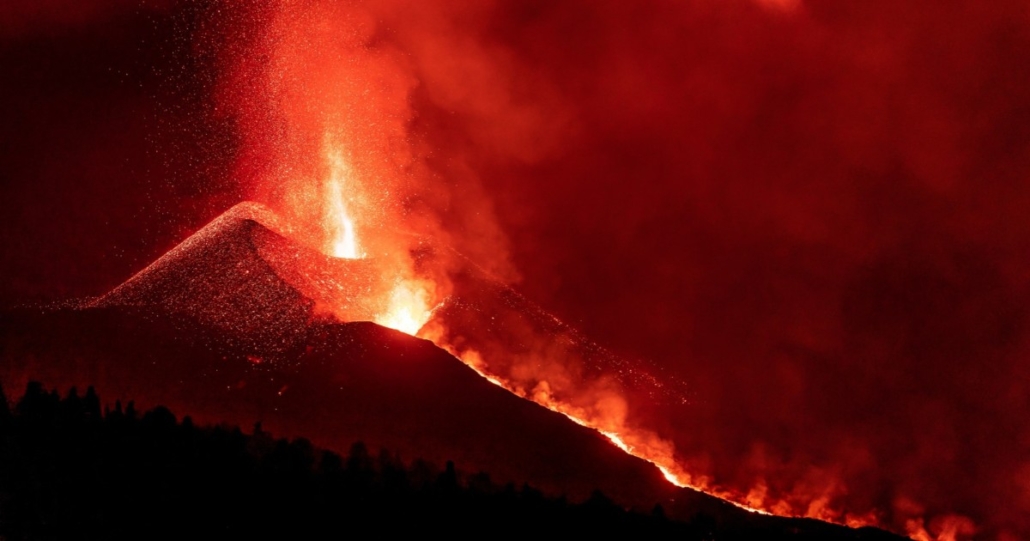
It lasted 88 days, emitting a river of lava which destroyed 3,000 homes and buildings and led to the evacuation of 7,000 inhabitants. For weeks, a fearsome deep rumbling sound was heard, the flaming volcano could be seen through the night and fine black ash fell for many miles around.
Only one person died during the eruption, an older man who had been given permission to enter the zone to check his property and was later found to have died from inhalation of toxic gases. But many still live with the loss of those terrible weeks, when many terrified children were offered emergency psychological attention.
The eruption on La Palma confirmed theories that it is the western Canary Islands that are currently the most vulnerable to volcanic activity. The other most recent eruptions occurred underwater near El Hierro in 2011, and in 1971 on the southern tip of La Palma.
This supports the “hot spot” theory, which claims that the Canary Islands were formed by the African tectonic plate moving slowly eastwards over an especially active area of the earth’s mantle. This causes eruptions at the surface and, as the plate moves over the hot spot, chains of volcanoes are formed.
The ages of Lanzarote and Fuerteventura support this theory – the islands were formed far earlier than the western isles, and recent volcanic activity in the west also backs the hot spot thesis. But there is one great exception: Timanfaya.
In the famous account of Andrés Curbelo, the priest of Yaiza, “on the 1st of September 1730, between 9 and 10 o’ clock at night, the earth opened at Timanfaya, two leagues from Yaiza. On the first night, a huge mountain rose from the bowels of the earth, and flames escaped from its summit, continuing to burn for nineteen days.”
That mountain was the Volcán del Cuervo, now a popular walking route, but the eruptions continued for six long years, covering a third of the island in lava, ash and volcanic rock, burying several small villages forever and causing most of the island’s population to flee.
The Timanfaya eruptions of 1730 to 1736 are by far the biggest Canarian volcanic event in recorded history. They took place almost 300 years ago: a long time for humans but the blink of an eye in geological terms. And this means that if there is a “hot spot”, Lanzarote is unlikely to have moved past it.
Other theories, such as the idea that the Canaries are part of long volcanic fracture which also gave rise to the Atlas mountains in Morocco, are no more comforting. On the Canaries, we feel perfectly safe, but we never quite forget that we’re living on a volcano.
WHAT WOULD HAPPEN IN THE CASE OF AN ERUPTION?
The volcanic activity on the Canaries suggests that there would be plenty of warning of an eruption on Lanzarote. Eruptions are usually preceded by months, even years, of increasing volcanic activity, and Spain’s National institute of Geography carries out constant monitoring of seismic activity on the island.
If anomalous activity was reported, authorities would be alerted and a decision made to activate the PEVOLCA plan. This would trigger a meeting of scientists who would assess the probable outcomes. The Canarian Government’s Emergency Department would then decide whether to activate warnings and update the public about the situation.
This may involve evacuations, confinement within homes, establishment of no-go areas and other safety measures.
HOT TIPS
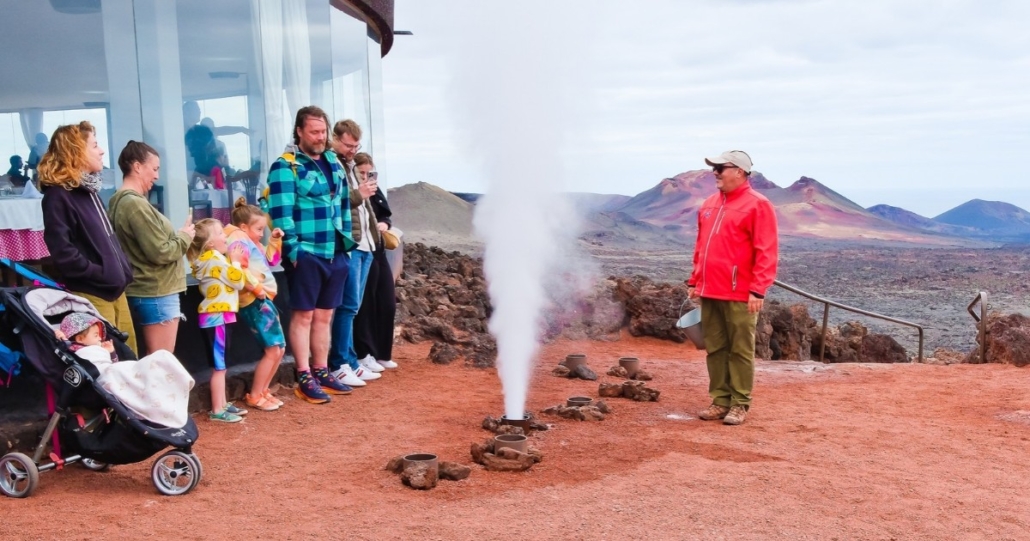
If you’re interested in Lanzarote’s volcanoes, a trip to the Timanfaya Visitors’ Centre, just down the road from the Fire Mountains, is highly recommended. It’s also free.
The recently-renovated Casa de los Volcanes Museum at Jameos del Agua is another unmissable experience. Admission is included in the entry fee to the Jameos. The Fire Mountains is Lanzarote’s favourite outing for good reason. It offers stunning views of one of the youngest landscapes in the world, a desolate, unspoilt and eerily beautiful place that returns in your dreams.
Several walks on the island offer further experiences of the island’s silent, awe-inspiring volcanic landscapes.





Leave a Reply
Want to join the discussion?Feel free to contribute!