
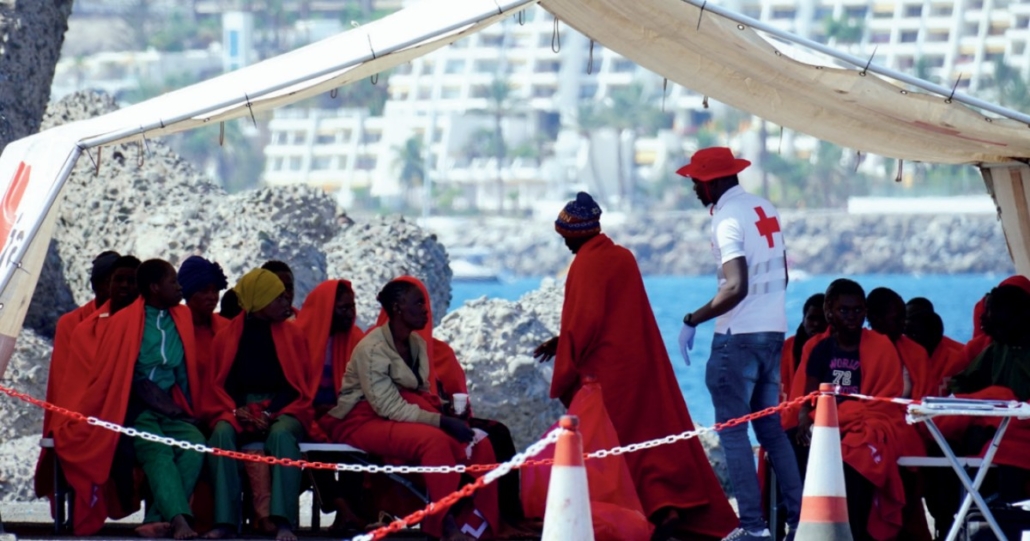
The Canaries saw irregular immigration in pateras (small boats) fall by over 60% in 2025, according to figures from Spain’s Ministry of the Interior.
Last year, 216 boats bearing 17,778 occupants were intercepted in Canarian waters. This marks a huge decrease on the figures in 2024, when 692 small boats, carrying 46,843 migrants, were registered.
To put these figures into perspective, more small boats arrived on the Canaries in 2024 than the UK, where just under 37,000 arrived. However, last year saw 41,472 arrivals in the UK, more than double the Canarian figure, and higher than the total figure of maritime arrivals to Spain (32,925).
The migrants that arrive on the Canaries have nothing to do with those that cross the English Channel. Almost all migrants to the Canaries come from African nations such as Mauretania, Senegal, Gambia and Morocco. None of these nationalities feature significantly in UK arrivals, which mainly hail from eastern locations such as Afghanistan, Iran, Iraq and Syria.
The fall in pateras also means a welcome decrease in the many hundreds of lives that would otherwise be lost on the dangerous Canarian route. The UN claims that 416 drownings occurred last year, less than half those of 2024.
The reasons for the fall in pateras are complex. Last October, Guardia Civil commander, Manuel Navarrete, claimed that the Spanish security force’s work with partners in source countries may have cut boats leaving from Mauretania, Senegal and Gambia by up to 40%.
However, local factors have also always affected the type of migration. A few years ago, many young Moroccans appeared to be arriving in order to avoid national service, which had been re-introduced by King Mohammed VI’s government in order to “promote national cohesion.” The almost total collapse of Morocco’s tourist industry during the Covid crisis, and several years of drought, were also factors in Moroccan arrivals.
Routes and destinations also change rapidly. Departures from the coasts of Morocco and Western Sahara often aim for the eastern islands of Lanzarote and Fuerteventura, but boats from countries further south tend to take a much longer route, often ending up approaching El Hierro, Tenerife and La Gomera from the south. El Hierro has taken the brunt of recent arrivals, with 60% of last year’s total arriving on the island.
Most adult migrants do not stay on the islands. They are often transferred to centres in mainland Spain where many seek to get to France (most source countries are French-speaking). However, children are the responsibility of the regional government, and the Canarian Government has consistently called for more resources from Spain to address this problem.









Leave a Reply
Want to join the discussion?Feel free to contribute!