
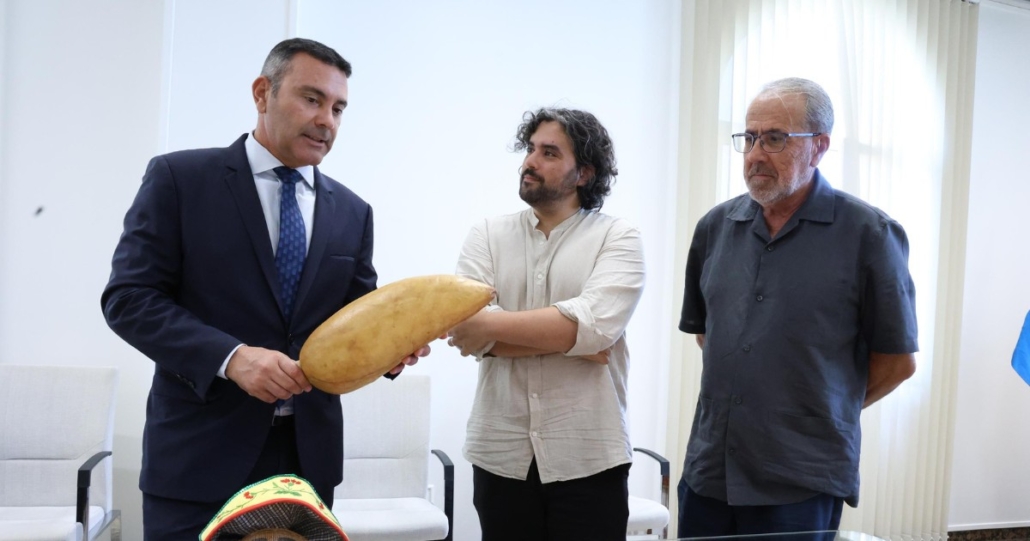
The centuries-old Carnival tradition of Los Buches is set to become part of the permanent Canarian heritage collection at the Alamo Museum in San Antonio, Texas, strengthening the links between Lanzarote and the American city founded by Canarian families in 1731.
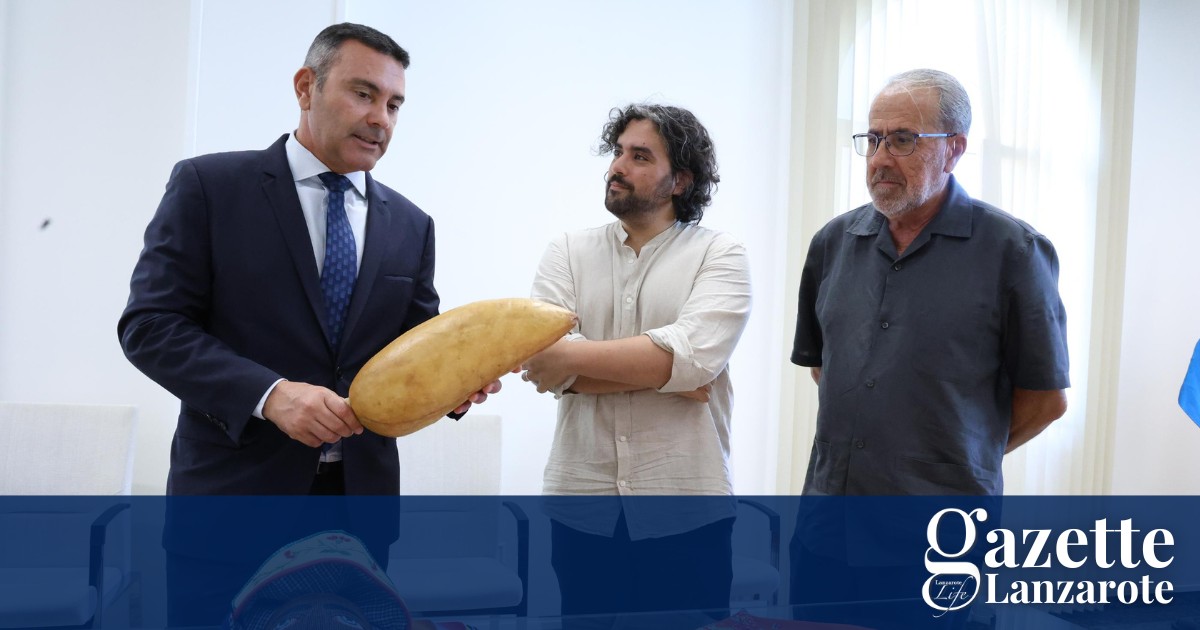
The announcement follows the presentation of a replica of the traditional Los Buches costume to Oswaldo Betancort. The costume will be displayed in the museum’s section dedicated to the Canary Islands’ legacy in Texas.
The outfit, created by artisan Tania Nicolova under the supervision of traditional dress expert Ricardo Reguera, faithfully recreates 19th-century clothing. It includes embroidered trousers, an openwork shirt, a velvet waistcoat, gaiters, leather shoes, scarves and the distinctive montera hat.
Completing the display are the tradition’s unmistakable accessories: the characteristic mesh mask, made by artisan Marcial Viñoli and painted by David Machado, and the iconic buche, produced by Factum Arte. Traditionally fashioned from the tanned and inflated stomach of a cartilaginous fish, the buche is used during Carnival celebrations to playfully tap spectators, reflecting the light-hearted spirit of Arrecife’s historic Entrudo festivities.
The inclusion of Los Buches forms part of an ongoing partnership between Lanzarote and San Antonio ahead of the 300th anniversary of the city’s founding in 2031.
Traditional Crafts Also Heading to Texas
The Alamo Museum’s Canarian heritage exhibition will also feature a broader selection of Lanzarote’s traditional craftsmanship, providing visitors with a richer understanding of the island’s ethnographic heritage.
Among the items travelling to Texas are authentic 18th-century men’s and women’s traditional costumes, examples of Lanzarote’s distinctive hand-moulded pottery made from volcanic clay using techniques inherited from the island’s indigenous inhabitants, traditional basketry, and intricate examples of rosettes and calado (openwork embroidery), crafts that continue to preserve the skills of Lanzarote’s women artisans.
The exhibition will also include a reproduction of Los Novios del Mojón, one of Lanzarote’s most iconic ceramic creations. These stylised clay figures, historically associated with fertility, love and marriage, were once close to disappearing alongside the decline of traditional pottery. Their survival is largely thanks to master potter Dorotea Armas Curbelo (1899–1997) from Muñique, who rediscovered the original moulds in the mid-20th century and helped restore Los Novios del Mojón to their place as one of the island’s best-known symbols of traditional craftsmanship and cultural identity.







Leave a Reply
Want to join the discussion?Feel free to contribute!