
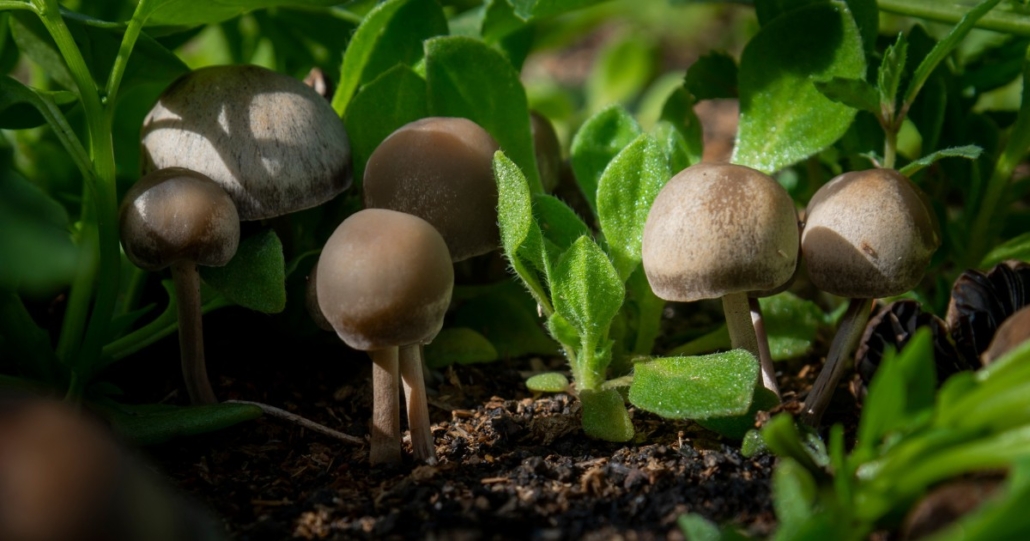
After the winter rains, there is no better time than now for gardeners to leave their plots and discover the wild beauty of Lanzarote, drinking in inspiration, ideas and knowledge that can only improve their own little piece of the island.
BARRANCOS
A barranco is ravine which channels rainfall to the sea. Lanzarote has several, and all of them will have been well-soaked over the wet winter months.
The Barranco del Higueral leads from the mountain top overlooking Femés down to the sea and is part of the oldest rock formation on the island. It’s a stunning walk, and at this time of year you’re likely to spot wild melons, as well as many other species.
The island’s most beautiful and spectacular barrancos, however, are in the north of the island. The Barranco de Tengüime, between Guatiza and the wind turbines on the heights of Los Valles, explodes into life after the rains, while the Barranco de Chafarís, near Haría, is one of the greenest parts of the island.
FAMARA’S CLIFFS
The cliffs of Famara are Lanzarote’s most varied eco-system, the site of greatest botanical diversity on the island and home to around 700 species of plant, 20 of which are found nowhere else in the world.
There’s no need to tackle the cliff face itself, just take a walk along the cliff at the Hermita de las Nieves, El Bosquecillo, Montaña Gayo or Las Rositas near Yé, and you’ll see more than enough impressive greenery.
In 2007, the Cabildo published a book called Las Plantas Autóctonas de Lanzarote. Su uso en jardinería (Indigenous Plants of Lanzarote. Their use in Gardening), which is a vital resource for anyone interested in local fauna. The book is freely available online and, although it is in Spanish, the translation apps on modern smartphones should be able to translate it well enough.
GRASSLANDS
People rarely associate meadows and grasslands with Lanzarote, but they exist. Farmers often sow grasses and cereals to feed livestock, while many other areas lie fallow, allowing wild grasses and flowers to thrive alone.
Generations of schoolchildren have visited the Llanos de Máguez, a broad meadow near the nature centre above the village, while you’ll also find wild grasslands around Montaña Blanca and Conil.
VOLCANOES
Volcanic craters gather moisture and are sheltered from the winds that continually comb the island. This makes them a valuable site for plants and many craters will be full of greenery at this time of year.
The peaks of volcanoes can also host surprising amounts of plants. If you’re in Tías, we’d recommend a hike to the peak of Montaña Guardilama – it’s a steep ascent, but at the top you’ll find a small, almost alpine area where beautiful wildflowers bloom.
Fungi galore
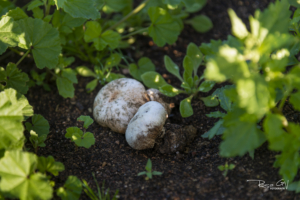
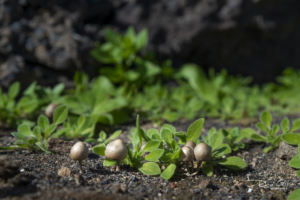
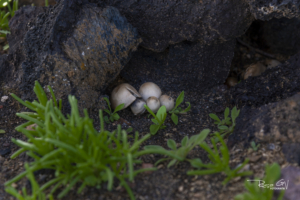
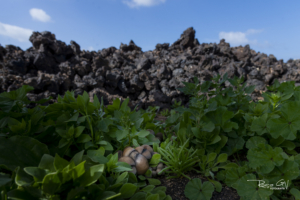
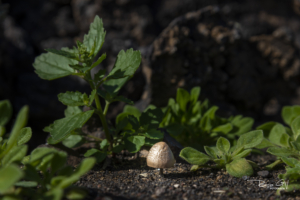
Rosa García (@rosagvnocturnas on Instagram), a photographer based on Lanzarote, recently photographed mushrooms that had appeared on Lanzarote after the rains – a rare sight.
The mushroom is Agaricus litoralis, or the coastal mushroom, a largish, fleshy white mushroom which is edible, although consumption is not recommended unless you’re absolutely certain.
The rains also promise a good crop of papas crías, a fungus known as the desert truffle. This fungus always exists near the small yellow Helianthemum canariense plant and is often collected by locals at this time of year. Although it lacks the exquisite fragrance of other truffles, it has an agreeable flavour.






Leave a Reply
Want to join the discussion?Feel free to contribute!