

Lanzarote has experienced its coolest, wettest winter for some years, but weather that spoils a few days of holiday is nothing unusual on Lanzarote, and it brings advantages in many ways.

Photos: Ipedrakos | @Instagram
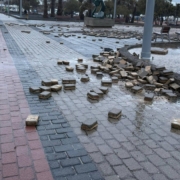
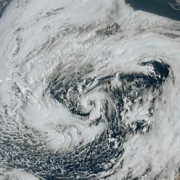
December and January on the Canaries were marked by the arrival of cold polar fronts arriving from the north Atlantic, as well as the effects of Atlantic storms Emilia, Francis and Goretti. As a result, two thirds of the 76.7 mms of rain that fell on the island last year came in the last month of the year, when some rainfall was recorded on one out of every two days on Lanzarote.
The total of 53.7 mms that fell in December 2025 was nearly as much rain as the island experienced in the whole of 2024 (56.4 mms), and far more than in the drought year of 2023 (38.7 mms). However, 2025 was nowhere near as wet as 2022, when persistent rains in March and heavy storms in September left 130 mms of rain.
December 2025 was also cooler than usual, with an average temperature of 18 degrees Celsius – the coldest month for several years.
On December 12th, the island recorded its lowest maximum temperature since records began, with the thermometer not rising above 15.5 degrees all day.
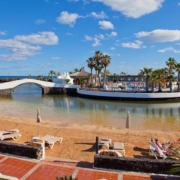
Rain and cold weather on Lanzarote are always a disappointment for holidaymakers, especially when they arrive during one of the busiest seasons of the year. Days at the beach are cancelled, sunbathing is off-limits and jackets or cardigans are often required to eat out on a terrace.
Yet anyone who arrived from icy northern Europe this winter will still have noticed the immediate difference. December’s average temperature of 18 degrees may be low for the Canaries, but it’s still above the average for May in the UK. Most holiday makers will have experienced plenty of warm, sunny spells along with the poorer conditions.
And rain also brings benefits to the island. Farmers and gardeners are, of course, grateful for the free water that falls from the heavens, and the heavy rains that provide a good, deep soaking for the soil are often associated with high grape harvests which Lanzarote’s wine industry relies on.
Rain can also enhance tourism. While some tourists in the cooler months may have a day or two spoiled by rain, those arriving a few weeks later will find an island that has been transformed from its usual dull brown and black colouring.


The flanks of volcanoes take on a green tinge, rural areas burst into life and, in really good years, the resulting displays of wildflowers can be breathtakingly beautiful. Even when there are showers, they are usually accompanied by rainbows, and the wet weather and calimas of December did provide the consolation of some stunning sunsets, with the entire western sky filled with shades of pale pink, deep salmon and glowing orange.
Clear skies that follow rainfall also add to the beauty, meaning that the early months of the year are perfect for walking, hiking and getting out and about and discovering the beauty that Lanzarote has to offer.
WEATHER WISDOM
“What will the weather be like next week/ month?” is one of the most common enquiries by tourists planning a trip to Lanzarote, but reliable answers are almost impossible to give. This is a small island in a vast ocean.
The best way to get an idea of the weather is to rely on previous years and the general patterns that affect the island. Rainstorms are most likely in late autumn and winter, showers in spring, summer often brings intense heat along with strong breezes while early autumn is generally calm and sunny.
It’s also the case that different parts of Lanzarote can experience different weather. Higher-lying areas inland are often colder than the coastal zones, and the north of the island often receives worse weather than the sheltered south.
Long term weather forecasts for the Canaries are rarely very reliable, but large-scale models can warn of significant weather systems that may affect the islands up to a fortnight in advance. More precise forecasts are only possible a few days ahead.
Weather watchers should get to know the AEMET website, where Spain’s national meteorological service provides the most exhaustive information based on several weather stations on the islands, as well as important weather warnings. Other providers, such as the BBC rely on information from the American DTN group which is often quite different from the AEMET forecasts.
Other apps, such as Windy and Windguru, are popular with surfers and provide online maps that show the development of major weather systems in the Atlantic.
Nevertheless, although official forecasts are generally reliable, they are not infallible. Weather systems are so varied and Lanzarote so small that weather can take a freak turn, such as the heavy flooding that occurred in Costa Teguise last April, which was not predicted by any agency.




Leave a Reply
Want to join the discussion?Feel free to contribute!