
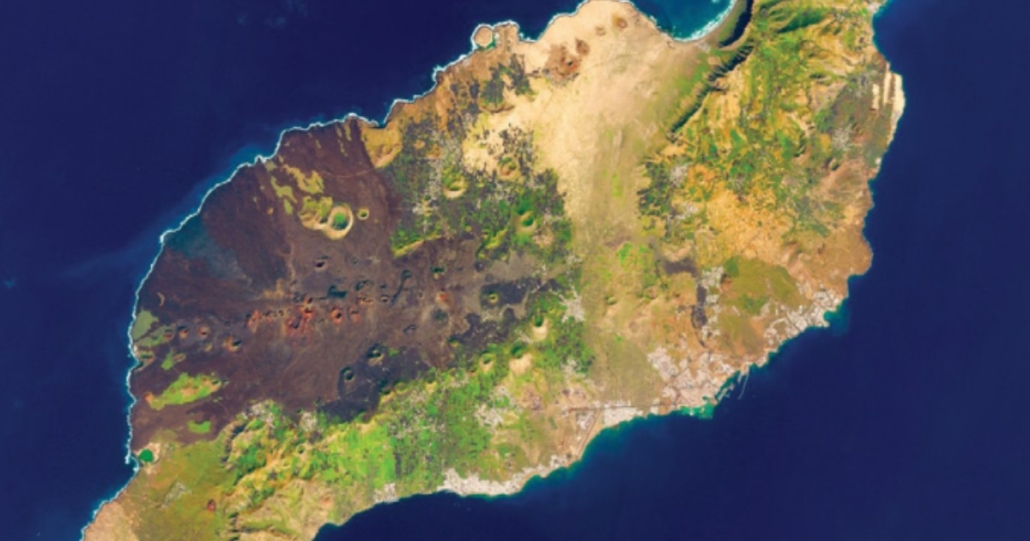
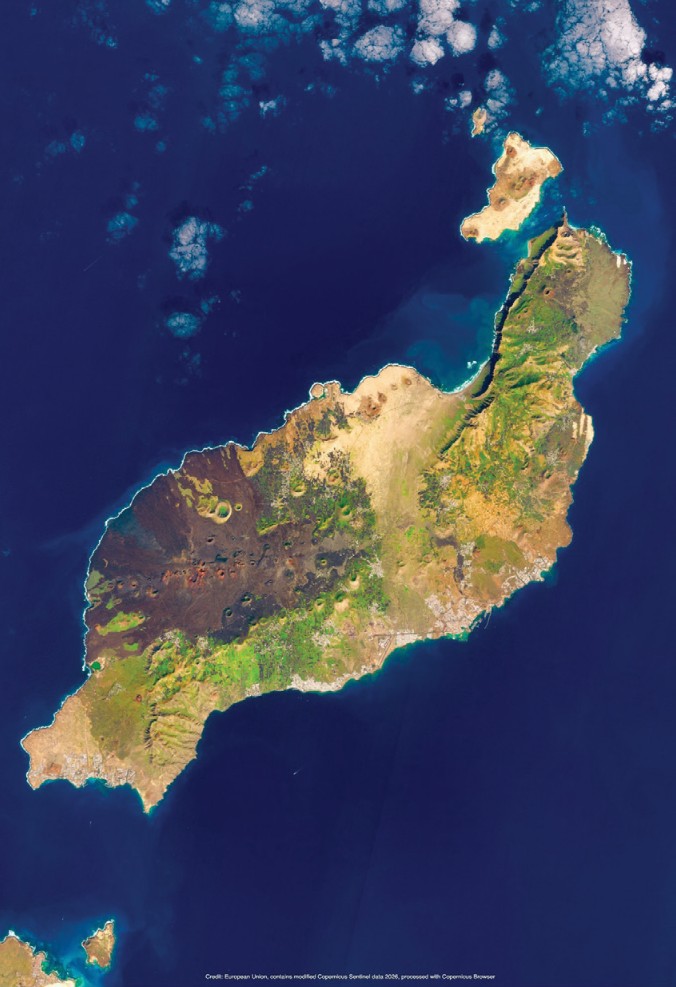
An astonishing satellite photo taken in late January shows how the winter rains and sunshine have turned Lanzarote into a temporary oasis, transforming the usually drab brown island into a brilliant green jewel.
The photo, taken by the EU’s Copernicus satellite, clearly shows how the higherlying areas of the island have burst into life, with the slopes and ravines leading eastwards from the Famara cliffs turning a deep, vivid green.
The area south of the ridge of ancient volcanoes that leads from Femés to San Bartolomé is also verdant, with plants making the most of the run-off of rain and the shelter from the northern wind. The volcanoes themselves resemble a string of emeralds, each with plant life thriving in the sheltered, fertile volcanic craters.
Certain areas, however, remain unchanged. 300 years after the main eruptions, plant life remains scarce in the cloak of black lava covering the Timanfaya region. The largest crater on the island, at Caldera Blanca, is a brilliant green and the “islotes” (areas where lava did not reach) are also dusted with greenery.
Lanzarote’s desert region south of Famara and Soo, known as El Jable, also appears unchanged from space, although a closer visit at ground level will show that the tough plants and wildlife there are making the most of the moisture.
The southern tip of the island also remains light brown, surrounded by the inhospitable terrain of the Los Ajaches wilderness and the desolate zone north of Montaña Roja.
Towns and larger villages can clearly be picked out, With Teguise, Tahiche, Tías and San Bartolomé white islands surrounded by meadows and fields, while the built-up region stretching from Puerto del Carmen to Costa Teguise, where most of the island’s population live, is also perfectly visible.
Lanzarote’s wild plants are incredible opportunists and make the most of any rainfall. For that reason, many have a fairly short lifespan – germinating, blooming and spreading their seeds in a brief burst of glory before the dry, hot summer months force them back into dormancy.
So now’s the time to make the most of the island as it wears its green robe. It may look spectacular from space, but a closer visit, accompanied by the smell of greenery and damp earth, the buzzing of insects and the delicate, fleeting beauty of yellow, purple, red, blue and white wildflowers, is an opportunity any lover of the island should not miss.







Leave a Reply
Want to join the discussion?Feel free to contribute!