

Pope Leo XIV commenced last month’s historic visit to the Canaries with a hard-hitting message about migration and human dignity.
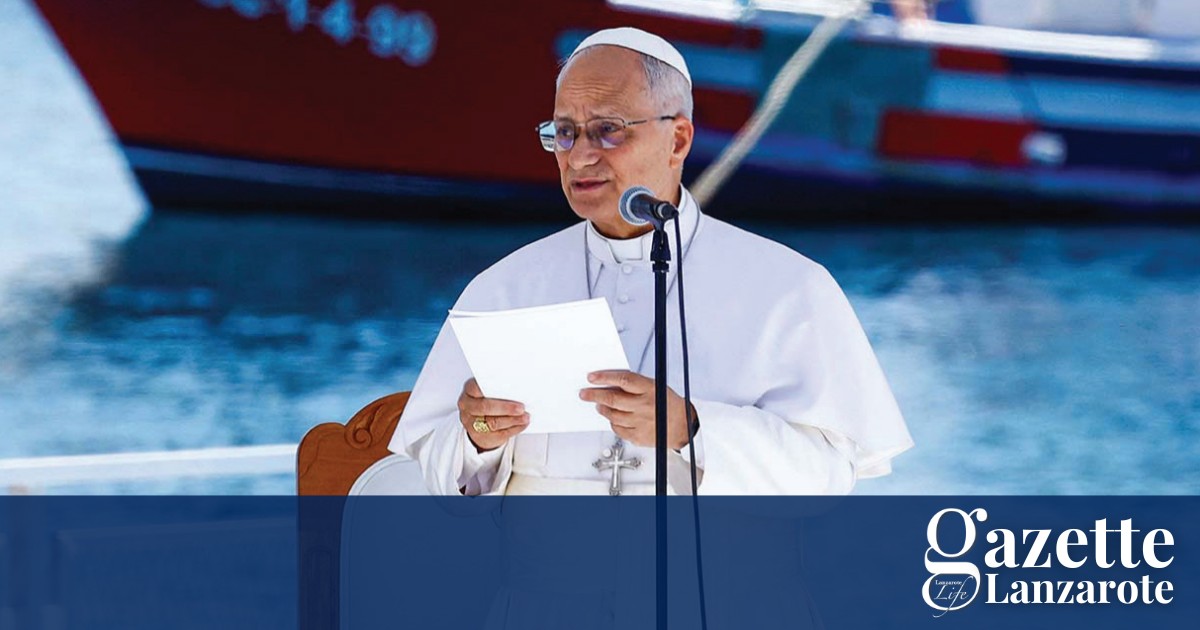
The first Catholic diocese on the Canary Islands was established on Lanzarote’s south coast in 1404, just two years after the French mercenaries Jean de Bethancourt and Gadifer de La Salle landed on the beaches of Papagayo to claim the Canaries in the name of the Spanish Crown.
622 years later, on June 11th 2026, Pope Leo XIV became the first Pope ever to set foot on the islands, as he concluded his Spanish tour with a two-day visit to Gran Canaria and Tenerife, fulfilling an earlier promise he had made to come to the Canary Islands
During his short visit, Pope Leo visited the impressive cathedral of Santa Ana in Gran Canaria and presided over huge open-air masses at the Las Palmas football stadium and Santa Cruz de Tenerife, but the main purpose of his trip was made clear as soon as he landed – to highlight and support the plight of migrants on the deadly “Canarian route”.
Heading straight from the airport at Gran Canaria to the port of Arguineguín, where thousands of migrants have been received over recent years, Pope Leo listened to the testimonies of a Nigerian trafficking victim, a Latin-American migrant, a Cáritas volunteer and a Spanish Maritime Rescue captain, before giving an address in which he urged governments to create “legal and safe pathways, rescue and assistance, cooperation against traffickers, protection for victims, serious processes of reception and integration, and policies that allow every person to live with dignity in their own land.”
“Each boat that arrives not only brings migrants,” he said – “It brings a question: what kind of world have we built, if so many brothers must risk death to seek life?”.
Pope Leo had harsh words for the EU, on the day before its Pact on Immigration and Asylum came into force, saying “It cannot proclaim human dignity and become accustomed to the Mediterranean and the Atlantic being cemeteries without tombstones.”
Leo also attacked the causes of migration, saying “While there is a right to seek refuge when life is threatened, there is also a right not to have to migrate: the right to remain in one’s own home without hunger, war, persecution, violence, the earth becoming uninhabitable, corruption stealing the bread of the poor, or weapons destroying the future of children”.
Before throwing a flower-adorned cross into the sea in memory of the thousands of migrants who have drowned at sea, Pope Leo ended with a warning: “Here, by the sea, every life that arrives asks us what remains of our humanity. Sooner or later, it will be known whether we knew how to protect it, or if we let indifference speak for us.”







Leave a Reply
Want to join the discussion?Feel free to contribute!