
With over 150,000 vehicles, Lanzarote has more than one car for every single adult resident. It’s one of the highest ratios of cars to residents in Spain, and there are no signs of a slowdown in the number of vehicles yet.
Of course, not every adult on the island owns a car. The high total of vehicles is most likely explained by the increased number of hire cars on the island, which rocketed shortly after the Covid pandemic finished.
More cars mean more traffic, and the effects of this increased traffic can be seen in the regular queues that build up at certain tourist attractions, increased traffic congestion and competition for parking spaces in almost every town, and, of course, an increased number of road accidents, the vast majority of which are thankfully minor.
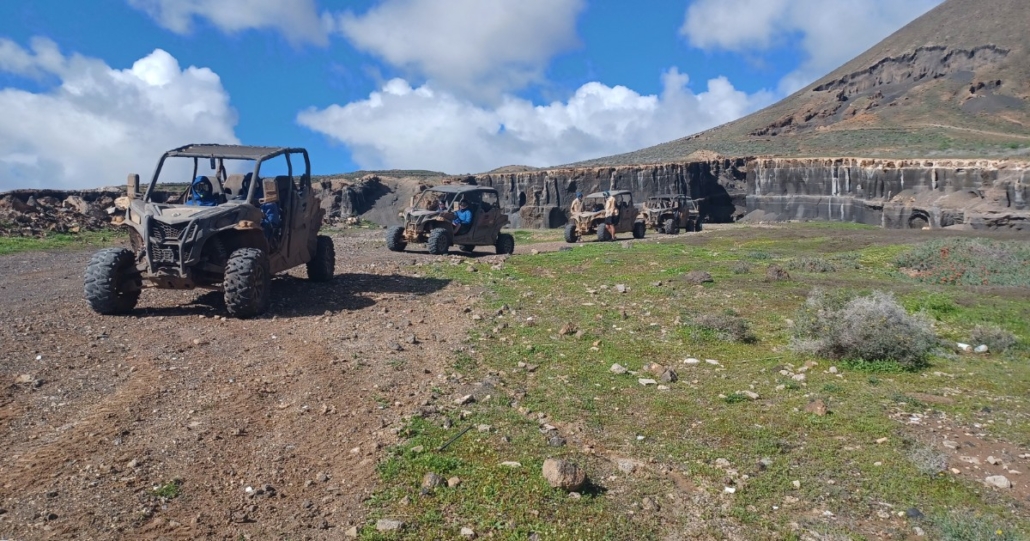
But motor vehicle madness isn’t just restricted to the main roads. Lesser-visited parts of the island also show how tourism is slowly but surely chipping away at rural areas and making motor vehicles normal in places where they were always an exception.
BUGGY BANS?
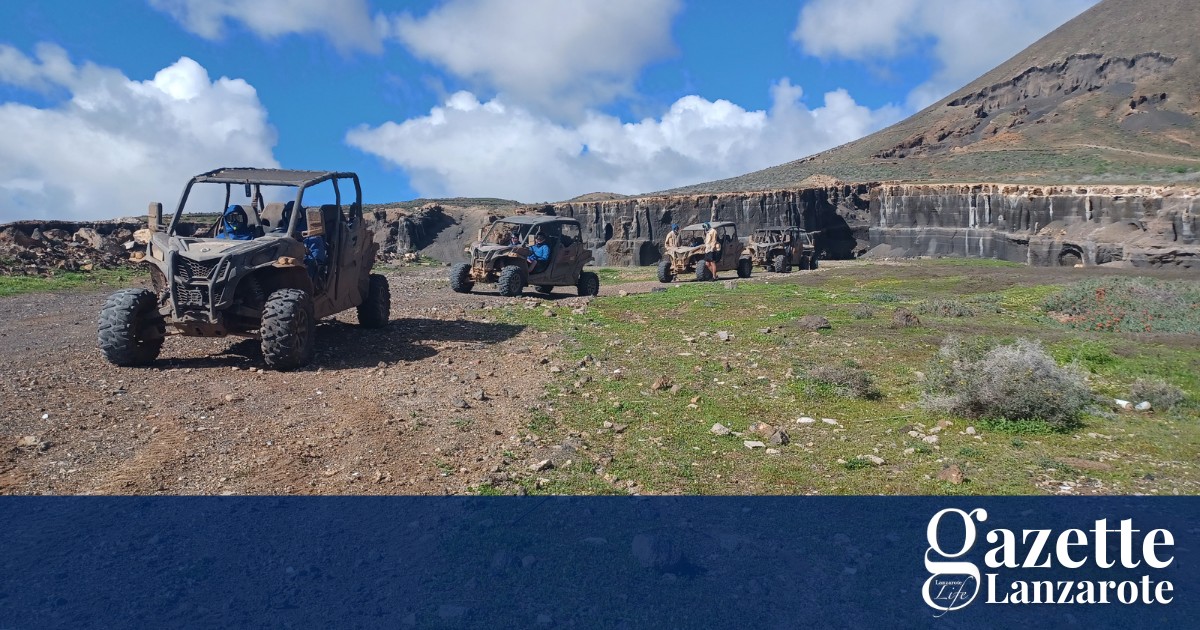
Last month the Cabildo’s councillor for Territorial policy, Jesús Machín, announced that the island government was “seriously considering” paralysing buggy excursions on the island following reports from the Environment Department and a request from the Guardia Civíl’s nature protection unit, Seprona.
Buggy and quad excursions, which often involve several vehicles travelling off-road in convoy, have been a cause of complaint from local residents for several years. The Guatiza Neighbourhood Association, for example, recently accused buggy tours of causing “serious environmental and visual impact, noise pollution and dust clouds in the air.”
Part of the problem is the absence of clear regulations. The Canarian Government has required Lanzarote to draw up a network of which roads and paths motor vehicles are permitted to use, but it has not done so up until now.
Once such a plan is produced, the Canarian law will apply, including measures such as limiting convoys to three vehicles, but without the regulations in place, Lanzarote is still the “wild west”, with environmental agents unable to take any action.
They can, however take action in official protected areas such as the Timanfaya National Park, the Natural Park of The Volcanoes, And the National Monument of Los Ajaches. In these areas, buggies are forbidden to leave tarmac roads, and excursion companies have been fined for taking clients on dirt tracks to Papagayo or in areas of Teguise during the breeding season of certain protected bird species.
THE MOTORISATION OF LA GRACIOSA
Meanwhile, on La Graciosa, an island that famously has no roads, ecological groups are warning against the motorisation of the island following a recent revision of regulations that will allow 15 vehicles to access the Natural Park area, instead of the two vehicles that have been permitted to do so since 2005. Ecologists in Action warn that the reasoning behind the 2005 limit, which recognised the exceptional nature of motor traffic on La Graciosa, is being forgotten and motor vehicles are becoming normal.
They have called for a halt to almost all excursions in motor vehicles, and urge the island to focus on excursions on foot or by cycle.
An idea of what the environmentalists fear can be seen every day near the beaches of Papagayo, which are also located in a protected area where tarmac road construction is prohibited. Several hundred vehicles arrive at Papagayo every day, kicking up dust, wearing the dirt track down and parking just behind the clifftops.
The track is regularly maintained and rolled, and the €3 charge for vehicles of non-residents raises around €300,000 a year, but many locals feel that Papagayo is no longer what it was – an area where seclusion was once possible is now a constantly crowded tourist trap.






Leave a Reply
Want to join the discussion?Feel free to contribute!