
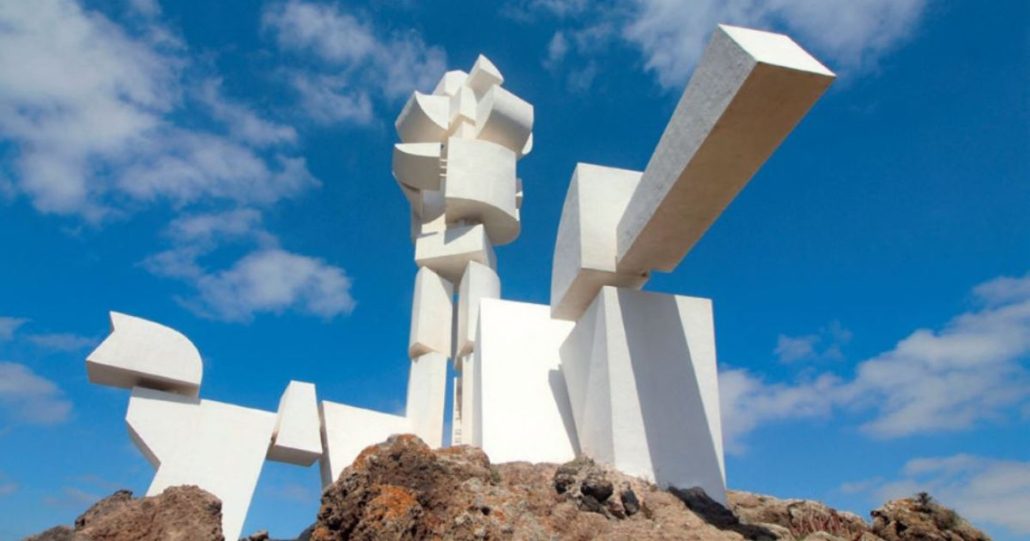
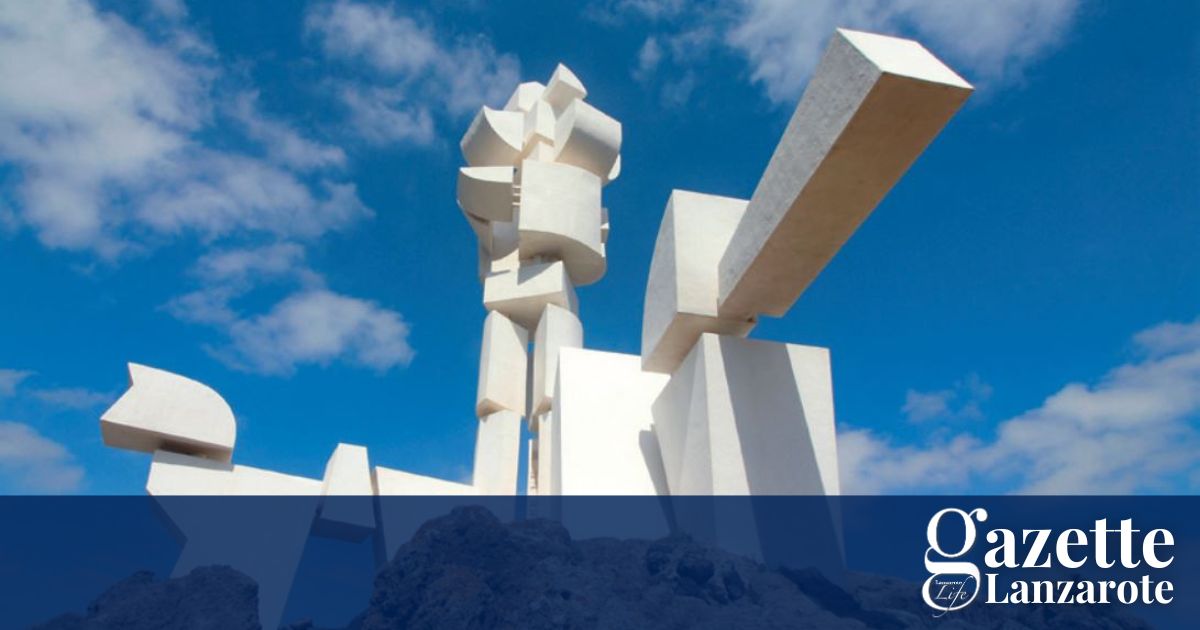
In the geographical heart of Lanzarote is one of César Manrique’s largest and most visible artworks, the sculpture titled “fertility” that is widely known as el Monumento del Campesino (the monument to the peasant).
When people refer to the centre of Lanzarote, they’re generally talking about the area of San Bartolomé and Mozaga that lies roughly halfway between the northern town of Arrieta and the southern resort of Playa Blanca.
This remains one of the most symbolic rural areas of Lanzarote, a place where the traditional sand-farming methods of El Jable to the east meet the unique vineyards of La Geria to the west. It was also the centre of the island’s grain production until that was virtually wiped out by the eruptions of the 18th century.
Those eruptions left several islotes (isles) – raised outcrops of land whose elevation spared them from the ash and lava flows of recent centuries. Usually recognizable because they’re paler in colour than the younger volcanoes, they range in size from the immense Montaña de Caldera Blanca to small “peñas” (rocks and boulders).
It was on one of these outcrops, La Peña de Tajaste, that Manrique decided to create what is the largest and possibly the most important of his public sculptures – the Monument to Fertility.
Working with his colleague, Jesús Soto, the Monument was constructed from the water tanks of fishing boats and concrete, all painted a brilliant white, and was erected 55 years ago, in 1969.
At that point in his career, Manrique was rapidly heading towards the purely abstract art of his later years and the monument is unapologetically avant-garde in style. Strongly influenced by cubism, the teetering assembly of white blocks and curved shapes represents a human being with two animals at his sides, but further details remain difficult to decipher.
Some claim that the animals are a donkey and a kneeling camel, representing the two beasts of burden that were commonly used in Lanzarote’s fields. Others see a cat in one of the figures, but Manrique keeps us guessing. It’s an imposing tribute, but also a playful, affectionate one.
It also caused controversy at the time, when Lanzarote was still part of a Spain that was suspicious of modern currents of art. One of Lanzarote’s favourite hobbies is asking “What would César have thought?”, and his response to more recent works of public art, which are almost all figurative, realist depictions, would be fascinating to hear. Manrique’s pioneering use of recycling, and his bold vision of art living alongside nature, remain unique and unmatched.
The Monument is just part of larger complex known as the Casa-Museo (Museum-House) del Campesino, and if you’re interested in Lanzarote’s older traditions, this is an unmissable visit.
It is here where Manrique converted an old estate, with its house and outhouses, into a museum and restaurant that celebrates the island’s typical architecture, with balconies, patios, chimneys, farmyard equipment and native plants. The colour scheme used here – whitewashed homes with green doors and windows, has since been adopted as the legally enforced aesthetic for much of the island.
Expanded in the 90s after Manrique’s death, the Casa- Museo is now an important centre for Lanzarote’s crafts, such as pottery and embroidery. On most days you can see crafters in their workshops, and even join in. There are also shops and an acclaimed restaurant but above all, it’s one of those unmistakeable “Manrique places”, enchanting and beautiful, and simply a lovely place to spend an hour or so.
The Casa Museo del Campesino is open from 10am to 5.45 pm each day. Entry is free.





Leave a Reply
Want to join the discussion?Feel free to contribute!