
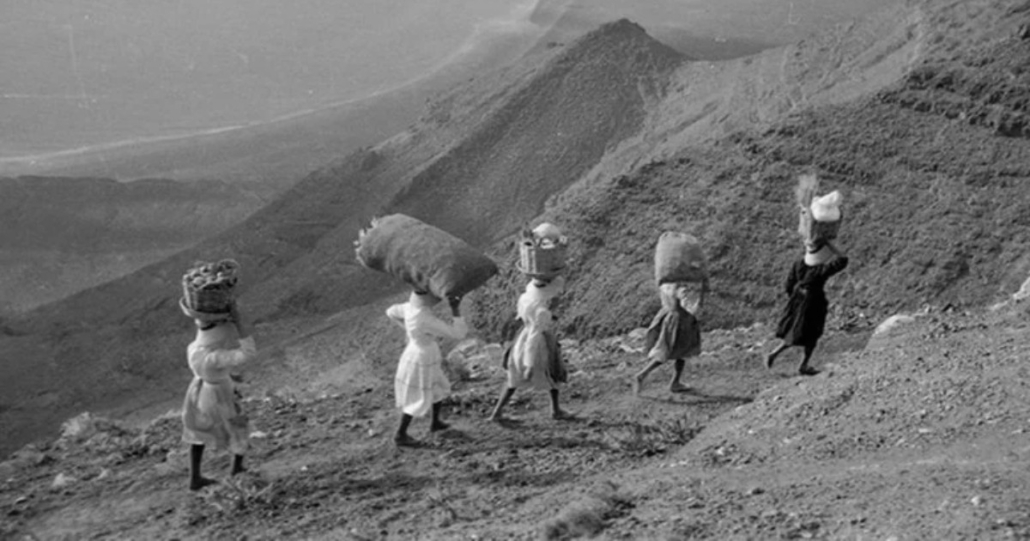
The photograph of La Graciosa women returning home with the supplies they’ve bought and traded at Haría balanced on their heads has become one of the most famous images of Lanzarote’s past.
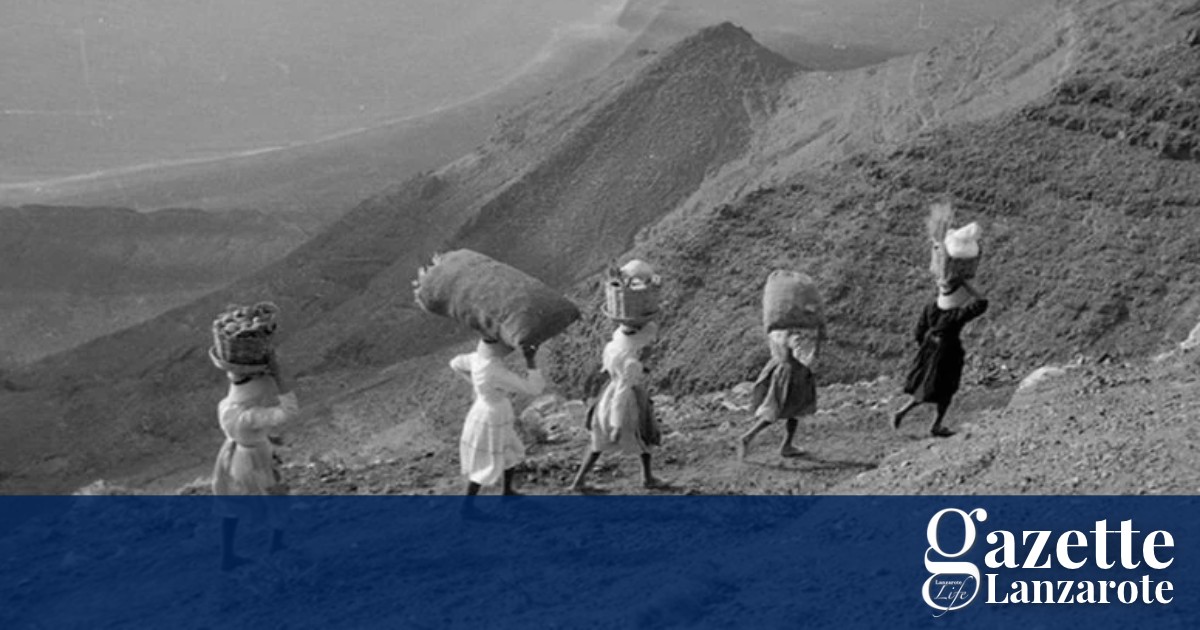
It was taken by Javier Reyes, Haría’s local photographer, at some time in the 1960s, and shows five women and girls, wearing light footwear and traditional palm-woven hats, starting their descent from the top of the Famara cliff with baskets and sacks balanced on their heads.
In the distance, you can see their destination, the Playa del Risco, where the men from the island would be waiting to ferry them back to their homes.
The zig-zag path known as the Camino de las Gracioseras is still one of the toughest walks on the island, a dangerous descent over loose stones and a gruelling uphill slog. Most hikers who attempt it wear strong footwear, are not carrying heavy loads and can look forward to a rest at each end of the climb.
But the women of La Graciosa were made of tough stuff. After they had been dropped on the beach by fishermen, they would balance their baskets on their heads and start climbing, in the shade of the cliff and often with morning mists rising alongside them. On sandier stretches of the route they preferred to go barefoot.
At the top of the cliff, they would then have to continue the five miles, often in hot sunshine, to Máguez and Haría, where they would sell or trade the dried fish they had brought with them for vegetables, grain, fabric and other essentials to take back home.
At the end of the day they would walk back and, in earlier days, light a bonfire on the clifftop to signal their return. On the coast, other fires would be lit, signalling to the menfolk where their wives and daughters would be waiting for them. Then it would be another boat trip home.
Before a cemetery was built on la Graciosa in 1943, the islanders of La Graciosa would also have to carry their dead to the mainland and bear the body up the cliffside to be buried in consecrated ground on the mainland.
The arrival of motorised ferry services finally put an end to the women’s weekly trek, but even today you can still find elderly Gracioseras who remember carrying heavy loads up and down the cliffside when they were young women.
Five years ago, a local organisation named Culdecase recreated the journey of the Gracioseras, and a descent to the beach has been held in October every year since.








Leave a Reply
Want to join the discussion?Feel free to contribute!