
Carnival starts long before the parades hit the streets, with months of preparation and a whole schedule of events and competitions leading up to the big day. But for most islanders, the street parades are what carnival is all about – here’s how to enjoy each one.
Arrecife’s big parade on Monday 16th February is always the first and the biggest of the processions. It’s a genuinely impressive experience, as thousands gather near the football stadium in the capital before making their way along the inner ring-road towards the Cabildo.
This year, Arrecife’s parade will be inspired by “Children’s TV of the 1980s” meaning that costumes based on shows such as The Smurfs, Dogtanian and Three Muskehounds and the classic anime Mazinger Z will get a good reception (UK shows like Supergran and Rentaghost perhaps not so much).
The next day, Tuesday 17th February, is a public holiday in most of the island, but is also the day San Bartolomé chooses to hold its much smaller parade. The theme for this year is Ancient Egypt.
On Wednesday 18th February, Arrecife will then hold its Burial of the Sardine parade, a bizarre custom in which a large papiermaché fish is cremated to mark the end of the capital’s carnival. The fish is followed by scores of grieving “widows” dressed in black and purple, and preceded by dancers, drummers and singing groups. This parade proceeds along Arrecife’s seafront from the Marina, and is one of the most picturesque.
Playa Honda will also wave goodbye to a fish on Friday 20th February, as San Bartolomé ends its carnival. The guachinango, or red snapper, will be burnt on Playa Chica after being paraded from the Esplanade at Guacimeta.
Puerto del Carmen’s parade will take place on Saturday 21st February (usually at 5pm, proceeding from Barcarola Apartments towards Fariones Hotel) and the theme of the carnival will be “The Crazy 1920s”, so dig out those flapper costumes and join 83-year-old Juan Medina, who has been leading carnivals dressed as Charlie Chaplin for 40 years.
Puerto del Carmen’s parade is always a glorious affair, taking place along the seafront as the sun sets, and it’s also the start of four weeks of Saturday parades around the island.
The following Saturday, 28th February, will see Haría take to the streets. This is a much smaller parade in the picturesque northern town, but that gives it an element of charm and local character that may not always be clear at the larger parades. This year’s theme is Peter Pan and Never- Never Land.
In Teguise, the carnival theme has been confirmed as “Beautiful Mexico and Beyond – the Day of the Dead”. The exact date of Costa Teguise’s parade has not yet been officially announced, but judging by previous years and the dates we’ve been given it seems highly likely that it will take place on Saturday 7th March. Costa Teguise’s parade takes place up the hill from Sands Beach to the Pueblo Marinero, and the buildings on both sides make the noise and atmosphere surprisingly intense.
On the same day, the small town of Tinajo will also celebrate its carnival parade, with the theme of Vikings.
The final weekend of carnival season sees a small but lively parade on the beach of La Graciosa, but the main event is surely the big parade in Playa Blanca on 14th March. This year, the theme is the Gods of Olympus.
Note: Teguise, Playa Blanca, Tinajo and Haría’s dates were not officially confirmed when we went to press, but seem almost certain to take place on the dates given. Most parades begin in the evening, at times ranging from 5pm to 7 pm, so check in advance.
What to watch for
Carnival is such a chaotic riot of colour and spectacle that it can be hard to understand what you’re seeing, but here are a few things to look out for:
Murgas: Murgas are singing groups, often dressed in humorous clown-like costumes. The songs they sing, which are often brutally satirical and accompanied by kazoos, have usually been performed at an earlier competition, and not much singing goes on at the parades – but the murgas embody the rebellious, absurd character of carnival.
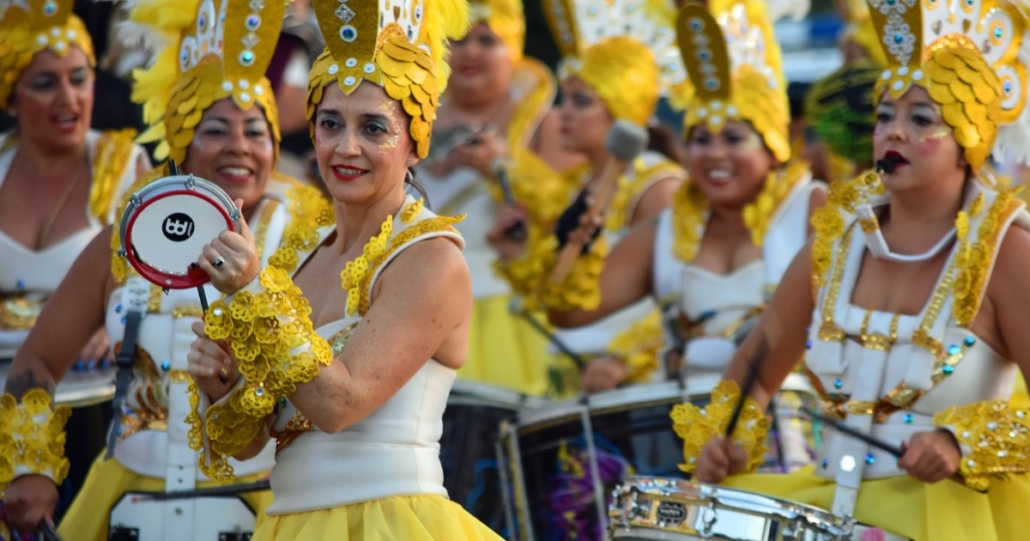
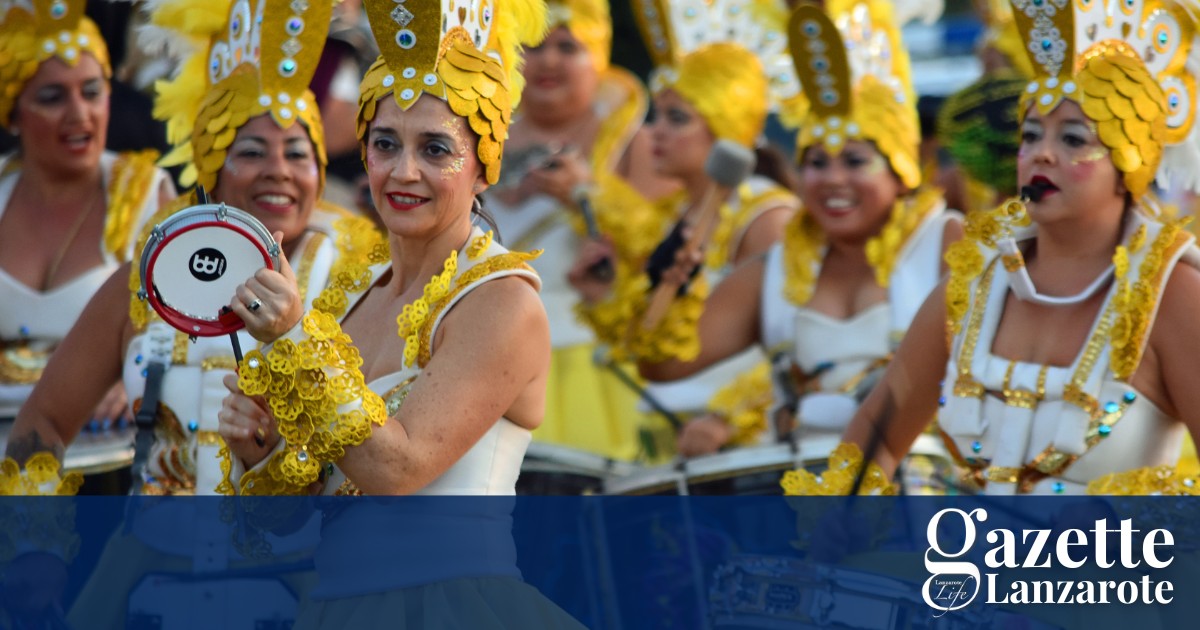
Comparsas: The comparsas are the beautiful soul of carnival, swaying, twirling fantasticallycostumed dancing groups doing an elegant samba shuffle. When their feathers and sequins flash in the evening sun, the magic of carnival is visible.
Batucadas: The thunderous drumming groups that provide the beat of carnival. Inspired by the samba schools of Brazil, the deep boom of the surdo drums provides the foundations of each rhythms, with the snap and clatter of several smaller drums and shakers on top. The leader of the batucada directs things with his or her whistle.
Reinas
The reinas, or Queens, have been elected earlier in the week and the winner of each competition usually joins the parade. There can be up to three queens – an adult Queen, who may be wearing her elaborate, costume; a juvenile Queen, and a bizarre, fantastical drag queen.
Traditional groups
Los Buches are an old carnival group from Arrecife who dress as fishermen in white breeches, black waistcoats and odd masks and carry inflated fish bladders, which they tap onlookers on the head with. Los Diabletes are the terrifying devils of Teguise, shambling around in their Manrique-designed overalls, jangling their cowbells and lifting their fearsome horned masks to their faces and startling onlookers with a “boo!”.
Carrozas Carrozas are the floats that usually follow the main pedestrian groups of the carnival. Often amazingly inventive, they usually have music blaring out and a group of revellers dancing behind the truck.




Leave a Reply
Want to join the discussion?Feel free to contribute!