
2025 saw Lanzarote fuller than ever, with more residents and tourists 2025 on the island than ever before, more cars on its roads and more demands on public services.
▶ JANUARY
Figures released in January revealed that Lanzarote was more popular and more crowded than ever before. 3.3 million tourists visited the island in 2024, and the population increased by around 5,000, both to all-time record levels.
One of those tourists was film star Tom Cruise, who spent a couple of days on the island, remaining for the New Year before jetting back to the UK.
A photo of a newly born baby on a crowded patera that had been rescued off Lanzarote made news headlines around the world. The image once again raised the issue of migrants arriving on the Canaries, although total numbers would decrease over the year to come.
▶ FEBRUARY
A scientist identified more than 500 locations where illegal fly-tipping had taken place on Lanzarote. Some councils have already started to crack down heavily on the offence, but more action was called for.
February also saw tragic accidents in which a woman driver died after hitting a wall, a seafood gatherer drowned in the sea and an old man in Tahiche was killed by a truck when its handbrake failed.
▶ MARCH
Lanzarote deepened its relationship with the city of San Antonio in Texas, as the Cabildo signed twinning papers with the Mayor of San Antonio.
The Texan city of 1.5 million inhabitants was founded by 16 families from Lanzarote who emigrated to the USA in 1730, just before the eruptions that devastated their native island.
We interviewed the mother and niece of Gary Shearer, the Scottish man who disappeared in March 2023 on the Strip in Puerto del Carmen. To date, there is no update on this tragic mystery.
On a happier note, Puerto del Carmen celebrated St Patrick’s Day in fine style – an event that clearly shows Lanzarote’s intimately close relationship with Ireland.
▶ APRIL
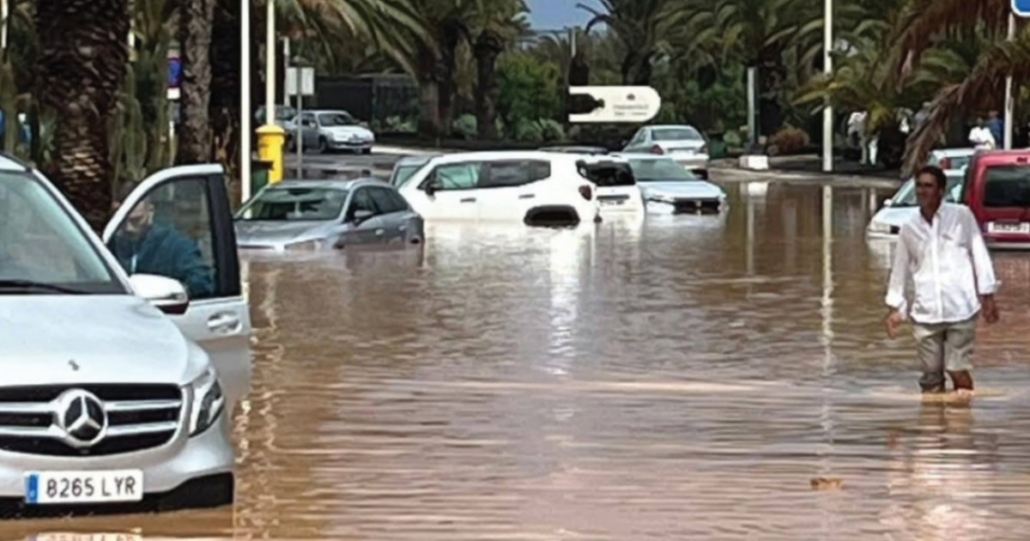
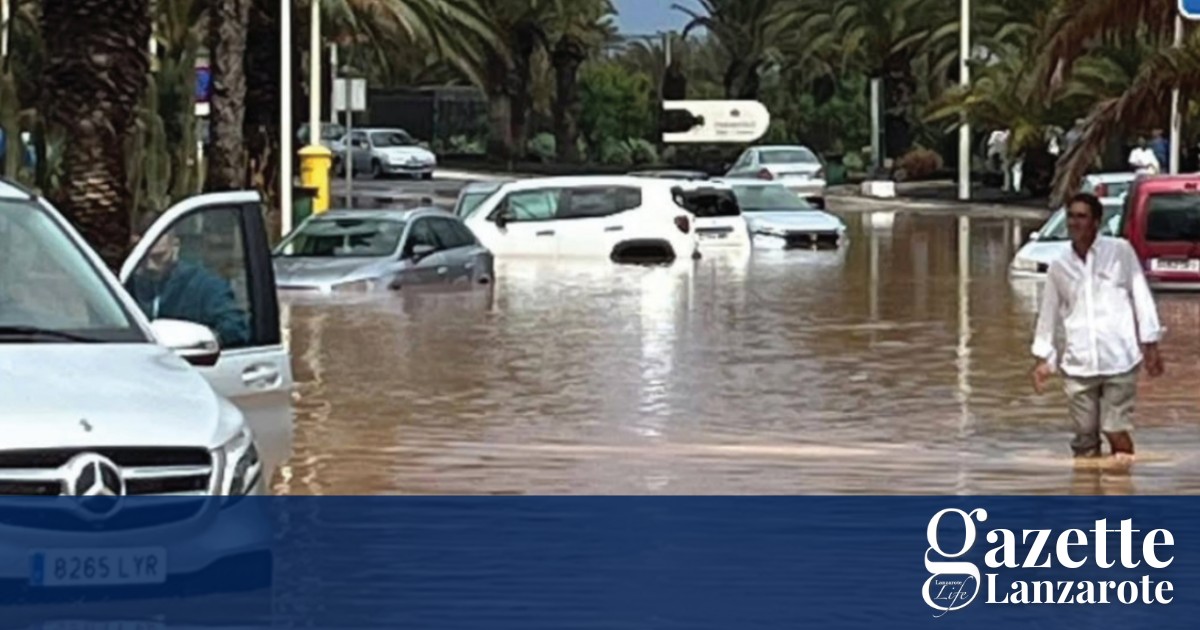
A freak rainstorm took parts of Lanzarote completely by surprise on the 12th April. While Playa Blanca experienced a little light rain, Costa Teguise was flooded when more than a year’s average of rainfall came down in less than two hours.
The resort was closed off completely for a few hours as roads turned into rivers and the Barranco del Hurón channelled torrents of water to the Playa de las Cucharas area. Hotels were closed for weeks or months as a result, while Arrecife also suffered serious flooding incidents. Fortunately, there were no human casualties.
April ended with islanders suffering from a telecommunications blackout which affected internet servers, leaving the island isolated for a few hours. The outage stemmed from a massive blackout on mainland Spain, although Lanzarote’s lights stayed lit.
▶ MAY
There was a shock for the resorts as Puerto del Carmen and Costa Teguise lost all the Blue Flags that symbolise excellence on beaches.
The announcement left Reducto in Arrecife and Playa Blanca’s town beach as the only Blue Flags still flying over Lanzarote beaches. Both of these beaches were also closed temporarily due to water contamination last year.
Pollution was just one of the issues highlighted during the third protest against mass tourism in Arrecife on 18th May. 2,000 noisy but peaceful marchers also criticised the housing crisis on the islands, the water shortages and poor working conditions, and called for a moratorium on hotels and a tourist tax. Their demands continue to be ignored by authorities.
In Puerto del Carmen, another fantastic Ironman race took place, this time overlooked by the newly installed statue of race founder Kenneth Gasque.
▶ JUNE
Spain’s most famous film director, Pedro Almodóvar, returned to his beloved Lanzarote to film his latest feature, Bitter Christmas. Almodóvar previously shot the film Broken Embraces on Lanzarote with Penélope Cruz, and this time he brought the Spanish actors Bárbara Lennie and Milena Smit to film at various locations. The film will premiere in March this year.
After Lanzarote’s Water Consortium voted to terminate the island’s contract with Canal Gestión, alleging breach of contract, Canal responded that it would not accept liability and blamed the Consortium for not raising water tariffs for several years. The dispute continues…
▶ JULY
The Cabildo warned that tourist excursions in buggies and quads were forbidden from driving on rural areas and urged the councils to act on the matter after damage to dirt roads and trails in various parts of the island. “You can drive on tarmac – nowhere else” said a Cabildo official.
We interviewed Charlie Romero, boss of Lanzarote’s only record label Malpaís Records. Since our chat there’s plenty more volcanic vinyl to pick up, with special mention for the first album by festival favourites Drupe.
▶ AUGUST
The wine sector expressed worries after the worst harvest of recent years, which was predicted to produce just 600,000 tons of grapes. This was later revised to 850,000 tons but the scarcity meant that grape producers could charge more than €4 per kilo for the first time. Lanzarote wine is now a highly demanded product and prices reflect that.
The island suffered heatwaves and calimas, with Tías briefly becoming the hottest place in Spain. Meanwhile, Spanish Prime Minister Pedro Sánchez arrived the Palace at Las Maretas near Costa Teguise for another family holiday.
▶ SEPTEMBER
Cruise season started up again with expectations that it will be a record year for the sector on Lanzarote. The fully operational cruise terminals at Puerto del los Mármoles and Lanzarote Marina have boosted cruise arrivals, and the news that Playa Blanca would shortly be receiving smaller boutique cruisers was also announced.
Scientists confirmed that the huge fossil eggs discovered near Órzola were of the aepyornis, or elephant bird, a 3-metre-tall prehistoric weighing 500 kilos.
Tragic news arrived from London after Lanzarote lad Yeray Sánchez was stabbed to death outside a McDonalds. Four youths have been charged with his murder.
▶ OCTOBER
A group of experts invited by Lanzarote’s Biosphere Reserve confirmed that Lanzarote’s tap water is safe to drink, less affected by plastic waste and more ecologically conscious than bottled water.
At Papagayo, three more skeletons were discovered at the San Marcial de Rubicón archaeological site, the first European settlement in the Canaries and the New World.
▶ NOVEMBER
The long-feared EES scheme, which requires third country nationals including Brits to submit to facial scanners and fingerprinting, was introduced on Lanzarote on 12th November. A few machines were operated at first, but the scheme will be expanded. There have already been reports of long queues at arrivals, although it has not been confirmed whether the processing is the problem.
The Canarian Government passed its Holiday rentals (VV) Law, which is expected to drastically reduce the amount of holiday lets on the islands. The regional government claim the controversial law will ease the housing crisis, but critics accuse it of simply favouring the powerful hoteliers lobby at the expense of small property owners.
▶ DECEMBER
The Cabildo announced an anti-drowning plan after the tragic deaths of three tourists in the autumn. All three victims went swimming on beaches where bathing is prohibited, during rough sea alerts. The plan aims to improve communication of the very real dangers of the sea.
Lanzarote dressed up in its customary Christmas finery, with beautiful belenes all over the island, resorts and town shimmering with lights, poinsettias everywhere and an island full of satisfied tourists.






Leave a Reply
Want to join the discussion?Feel free to contribute!