
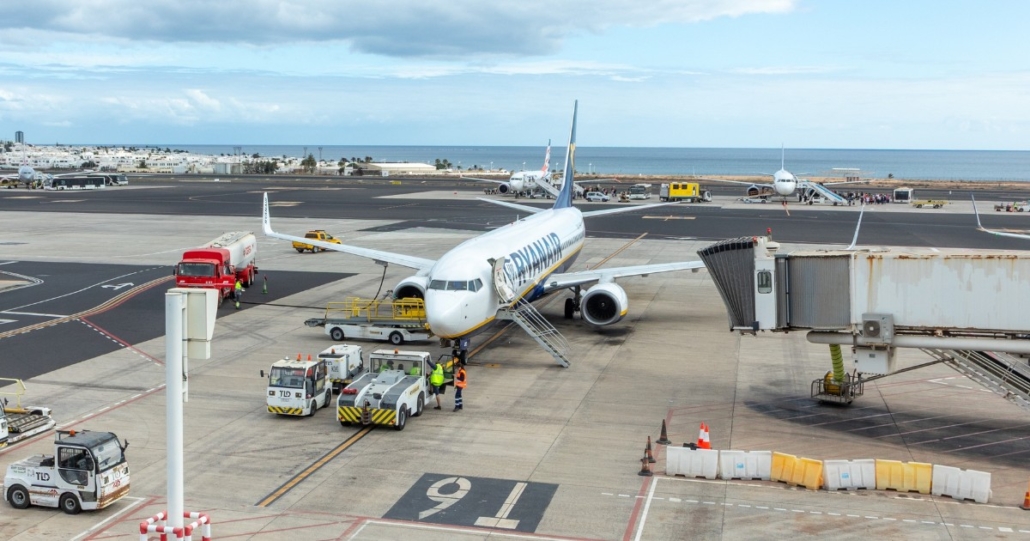
Holidaymakers flying to and from Lanzarote could soon enjoy stronger protections under a major overhaul of EU air passenger rights, including clearer compensation rules, improved fare transparency, and a ban on airlines refusing return flights to passengers who miss their outbound journey.
The European Union has reached a landmark agreement to modernise air passenger rights for the first time in more than 20 years, introducing clearer rules for travellers while maintaining existing compensation protections.
Under the revised regulations, passengers will continue to be entitled to compensation for cancellations or delays of three hours or more. Compensation levels remain unchanged at €250 for flights under 1,500 kilometres, €400 for flights between 1,500 and 3,500 kilometres, and €600 for longer flights.
One of the most significant changes is that airlines will now be required to proactively inform passengers of their rights and how to claim compensation within 96 hours of a disruption. Claims procedures are also being streamlined to make the process easier and more efficient.
The agreement provides greater clarity on what qualifies as “extraordinary circumstances” (situations such as severe weather or other events beyond an airline’s control) with the aim of ensuring more consistent application of the rules across EU member states.
Passengers will also benefit from improved fare transparency, including clearer information about hand baggage charges, making it easier to compare prices across airlines and booking platforms.
Another notable change is the ban on “no-show” policies for return flights. Airlines will no longer be allowed to refuse boarding on a return journey simply because a passenger did not use the outbound flight, nor can they charge a fee to reinstate the return ticket.
The regulations continue to apply to all flights departing from the EU, as well as flights arriving in the EU when operated by an EU airline. Airlines may also introduce an “EU Passenger Rights” label to help travellers better understand the protections available to them.
Passengers with reduced mobility and disabilities will receive stronger protections, including improved assistance during travel disruptions and better safeguards for essential mobility equipment.
The new rules must still receive formal approval from the European Parliament and EU member states. Once adopted and published, they will come into force 12 months later.









Leave a Reply
Want to join the discussion?Feel free to contribute!