
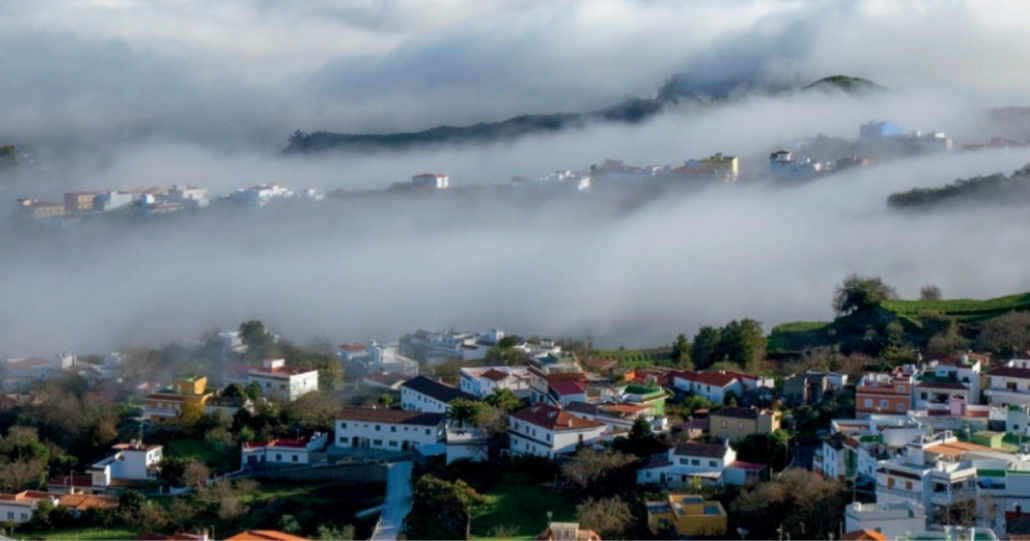
There is another Lanzarote; a green, timeless place in the clouds where the babble of running water and the lowing of cattle are often the only sounds to break the silence.
The village of Lanzarote is the highest-lying village in the Valleseco region of Gran Canaria and is home to around 900 residents. Some of those residents may descend from the original inhabitants of the village, who came to Gran Canaria following the volcanic eruptions on the island of Lanzarote in the 1730s.
Before the eruptions, Lanzarote was known as the “granary of the Canaries”, providing wheat, corn and barley to all the islands. The eruptions ended that, and although nobody died, several villages and thousands of acres of farmland were buried beneath a thick mantle of solid lava and volcanic ash.
Famine followed, with many islanders leaving to seek a better life, and when Lanzarote islanders were called to help build a church on the heights of Gran Canaria, the village that carries the island’s name was born.
The old tradition of bread and baking seems to have survived in the village of Lanzarote, where traditional baker’s ovens can be seen in the narrow streets, and wood-fired bakeries still exist.
Unlike the island it is named after, Lanzarote is located in the wettest part of Gran Canaria, where the rain, mist and sunshine combine to make it an incredibly green and fertile place, with an almost Celtic atmosphere. The village is surrounded by apple orchards that supply a local cider brewery and grassy meadows that feed the prized beef herds of the village.
The other notable features of the village are the stone ditches and lavaderas (washing places), which gather water from the rainfall and mist and channel it through the village. This provides free water for washing laundry and other purposes and even now, older women can sometimes be seen carrying a basket of laundry on their head to rinse it in the stone basins.
To get to the other Lanzarote involves a long and winding drive or bus journey from the town of Arucas, but the chance to discover the rural charm of Gran Canaria’s green and mountainous heart shouldn’t be missed.






Leave a Reply
Want to join the discussion?Feel free to contribute!