
Saturday 12th September is the most important day in Lanzarote’s calendar, when thousands of islanders dress up in traditional costume and make their way, by whatever means possible, to the church in Mancha Blanca.
The story of Lanzarote’s biggest pilgrimage goes back to the volcanic eruptions of 1736, when the earth trembled, ash fell from the skies and fiery rivers of lava lit up the night.
One of those tongues of lava threatened to engulf the village of Mancha Blanca, so the local priest begged for the aid of the virgin and thrust a wooden cross into the ground at the edge of the village.
The lava stopped, and the villagers promised to build a church in honour of the virgin. However, they forgot their pledge until, several years later, a young shepherd girl reported being approached by a sad-looking lady, who told her to remind the villagers of their promise.
When she returned, the girl was disbelieved, but a further visit in which the virgin left her thumb-print on the girl’s head convinced them. After being taken around local churches on a kind of identity parade for Virgin Marys, the girl identified her visitor as the Virgin of Los Dolores. The church was built, and the image of the virgin is said to have helped protect the village from another lava flow in 1836.
On Lanzarote, the Virgin of Los Dolores is also known as Our Lady of the Volcanoes and is the object of the island’s largest religious gathering – a romería (pilgrimage) that takes place every September and attracts thousands of islanders in traditional dress to Mancha Blanca.
HOW TO ENJOY LOS DOLORES
The Romería de Los Dolores is the only time of the year when people from every corner of Lanzarote gather in one place to celebrate their culture and their heritage.
It’s also a commitment – pilgrimages aren’t meant to be easy. Unless you’re very old, very young or have mobility problems, you’re expected to get there on foot for at least some of the way, and you’ll also need to invest in some traditional clothing.
But it’s worth it – the other timeless attraction of pilgrimages is the joy of arrival, a sense of deep satisfaction and achievement that permits you to enjoy the festivities to come. On the afternoon and evening of Saturday 12th September, the beautiful village of Mancha Blanca will be a joyful place.
It’s also an event where everyone is welcome, as long as they respect local customs and practices. One of those customs is wearing traditional dress.
The costumes worn are the traditional garb of field workers – long skirts, aprons and bonnets for women; high-waisted trousers, waistcoats, collarless shirts, sashes and bandannas for men. They’re available in several local shops in the weeks leading up to the pilgrimage and also come in useful on Canary Day and other local fiestas.
Many roads around Mancha Blanca are closed on the day of the pilgrimage, so it’s worth planning your route well in advance.
But if you don’t wish to attend the pilgrimage itself, you can still find plenty of activities in Mancha Blanca in the days leading up to the pilgrimage. The small town becomes a centrepiece for folk music, food and drink and is the location for the island’s biggest craft fair.
CRAFTS ON SHOW
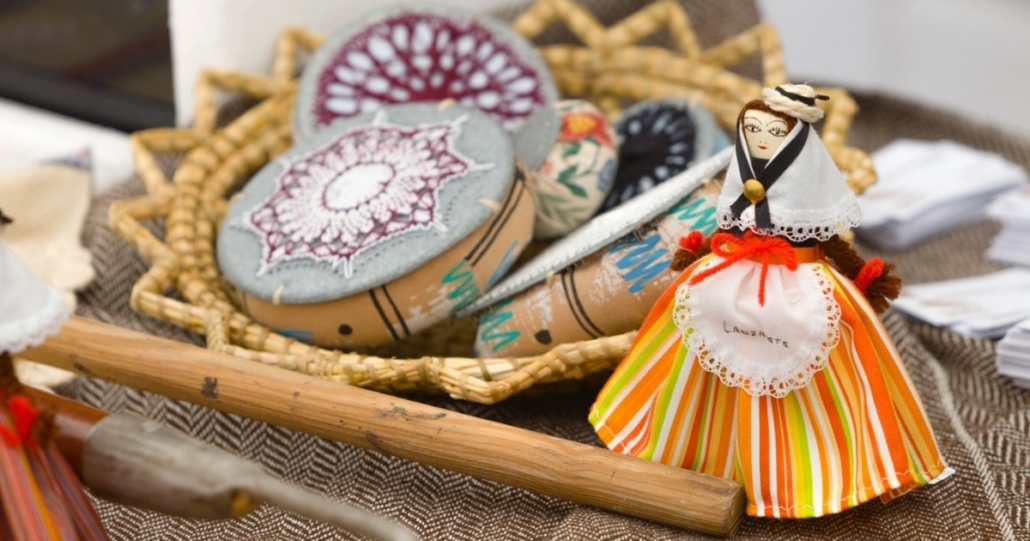
A statue of Doña Dorotea, the potter who created the famous figures known as The Lovers of El Mojón, stands in the main square of Mancha Blanca, announcing the villages importance to island crafters. And the annual craft fair at Mancha Blanca is an absolute must-visit for anyone interested in handicrafts.
Held in a large marquee, the fair presents more than 100 stalls where crafters of all types, from Lanzarote and the rest of the Canaries, proudly present their handiwork and offer items for sale.
Dates
At the time of writing Tinajo Ayuntamiento had not yet released the schedule for the Fiestas of los Dolores. However, these are the likely dates of the main events. To confirm, keep an eye on our website www.gazettelife.com or our Facebook page.
10th September: Craft fair opens. The fair is usually open from 11 am until 10 pm and will take place each day until the 15th.
11th September: Festival Nanino Díaz Cutillas. The most important folk music concert of the year, featuring groups from all over the Canaries.
12th September: Romería. Pilgrims arrive from all over the island, gathering in the main square at Mancha Blanca. At 7 pm offerings are made to Our lady of the Volcanoes.
14th September: Concert. This year the Madrid singer Malú is the headlining act.
15th September: Feast Day of Our Lady of the Volcanoes.



Leave a Reply
Want to join the discussion?Feel free to contribute!