
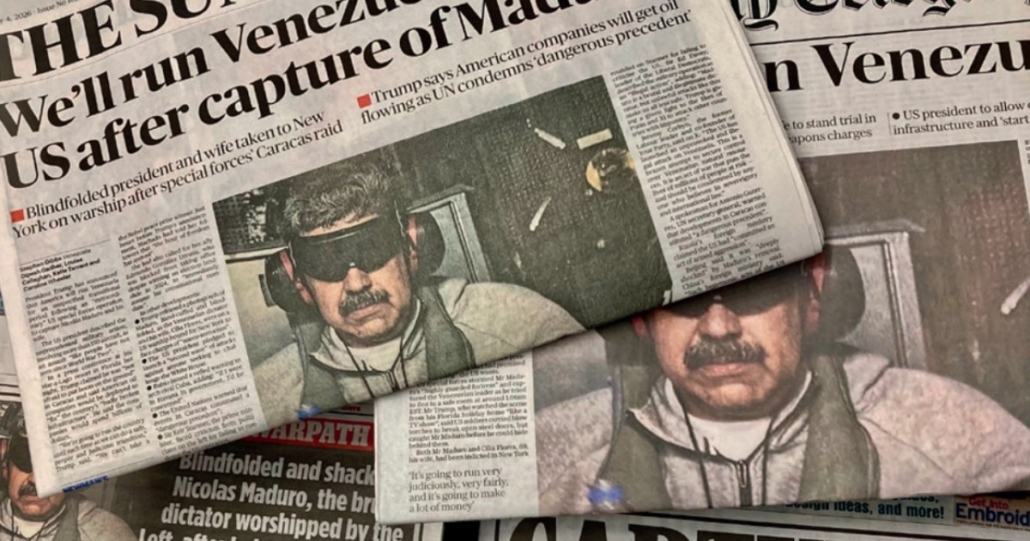
The US’s military action in Venezuela on 3rd January, which resulted in the abduction of Nicolas Maduro, was received with joy on the Canary Islands, which have always had close links with the South American country, and where many thousands of Venezuelans have chosen to make their home.
Ever since Christopher Columbus paused at La Gomera for supplies on his voyage to the New World, the Canary Islands have a long and close relationship with Latin America. For centuries the islands were the last stop for sailing ships following the trade winds across the Atlantic to the New World.
Poverty and famine caused many thousands of Canarians to emigrate to new homes in the Spanish colonies across the Atlantic. There, they established communities such as the city of San Antonio in Texas and became an important part of the tobacco trade in Cuba.
However, Venezuela was always the most important destination, with Canarian immigrants arriving there from the 16th century onwards, sent there by colonial rulers or choosing to make their own way to a better future. This continued until well after the Spanish Civil War, when several thousand Canarians emigrated secretly to escape the poverty and repression of post-war Spain.
In modern Venezuela a strong Canarian influence remains in the names, the spoken language, the institutions and businesses, and the process has always been two-way, with many Canarians returning home to their native islands after making fortunes in the coffee, cocoa and sugar industries. Many more Venezuelans have emigrated to the islands since the 1970s, making the Canaries the most “Latin-American” region of Europe.
Over 80,000 modern Canarians were born in Venezuela, and they have many more first- and second-generation Spanish children. Tenerife is the most favoured island – home to more than 50,000 Venezuelans. On Lanzarote, the figure is officially 1,144, but many more have adopted Spanish nationality.
Immigration to Spain from Venezuela increased drastically following the election of Hugo Chávez in 1998, and soared after the Venezuelan crisis in 2010, which saw hyperinflation, widespread starvation and repression by government forces. As a result, the majority of Venezuelans in the Canaries have been bitter opponents of Maduro’s regime, and the news of his toppling led to wild celebrations in many Canarian towns and cities.
Antonio and Rosa are two Venezuelan/Canarian residents who live on Lanzarote. As they fear reprisals against family in the country, we’re not using their real names, but both are active in Venezuelan associations on the island.
They started to receive messages from family members in the early hours of January 3rd and, once the news of Maduro’s capture was confirmed, Rosa says their reaction was celebration. “There was a lot of happiness,” she says. “For us, this means the beginning of the end of this regime.”
Both have been deeply worried about family members in Venezuela in recent years, and have taken part in aid events that sent medical supplies to the country during the Covid pandemic. Rosa says that, in Caracas “everyone is at risk. The security forces can arrest you and will search your phones and social media accounts for anything that is against the regime. If they suspect you, they’ll arrest and torture you.”
Antonio points out that many commentators and media complained that Maduro’s arrest was against international law, but asks “Where were their objections when Maduro and Chávez were imprisoning thousands of political prisoners, including peaceful protestors?”
As for whether the US’s intervention is merely an oil grab, Antonio points out that the oil industry in Venezuela would not have been possible without initial investment and infrastructure provided by US companies who were booted out by the Chavez regime. “Things were better when the Americans were there,” says Antonio.
Although they welcomed the removal of Maduro, both express uncertainty and worries about the future. For the time being, the ruling regime in Venezuela remains in place, with Maduro’s second-in-command, Delcy Rodríguez, remaining as acting President. Donald Trump has made no indications that this will change or that elections will be permitted in the near future.
Other worries involve family members in the United States, where almost half a million Venezuelans live. Many of these arrived in recent years, fleeing the crisis in their home country.
Last October, the US removed the temporary protected status (TPS) of all Venezuelan immigrants who do not have a Green Card permitting residence in the United States, meaning that all non-naturalised immigrants must undergo the difficult process of submitting asylum claims.
Rosa tells us that she has family members in Florida who are now afraid to leave their homes following round-ups and raids by the Immigration and Customs Enforcement (ICE) agents whose numbers Trump has more than doubled since taking power last year. “It’s better not to travel, not to expose yourself,” she says.
Spain, in contrast, is a far more welcoming destination where shared language, customs and strong historical ties mean that Venezuelans are rarely targeted, even by anti-immigrant parties.
Both Antonio and Rosa hope for democracy to return to Venezuela. They would support the appointment of Edmundo González, who is widely believed to be the real winner of the contested general election of 2024, as President. However, González remains in exile, as does last year’s Nobel Peace Prize winner María Corina Machado, who has also been proposed as a possible leader.
Antonio says “For the time being, people are still trying to leave Venezuela. The transition to democracy will be long and difficult – the regime still controls the security forces in the country – but if stability and democracy is established, I think many will return.”




Leave a Reply
Want to join the discussion?Feel free to contribute!