
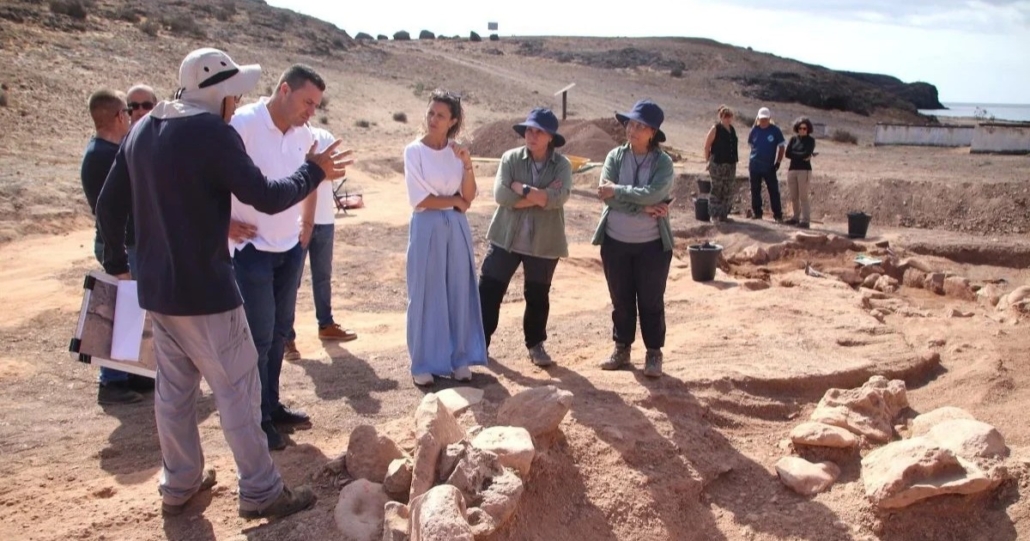
Archaeologists investigating the site of San Marcial del Rubicón at Papagayo are searching for structures linked to water use during the settlement’s early history, with written records suggesting there may have been more wells than the four already identified.
The seventh archaeological excavation campaign at the Rubicón site is focusing on uncovering evidence of water management and daily life in San Marcial del Rubicón, the first European settlement in the Canary Islands in the 15th century.
The project is supported by four institutions: the Canarian Government, the two public universities in the Canary Islands, and Yaiza Ayuntamiento.
Search for additional wells
The current investigation is concentrating on the ravine’s aquifer, where researchers hope to confirm or rule out the existence of additional wells mentioned in written sources from the 16th and 17th centuries.
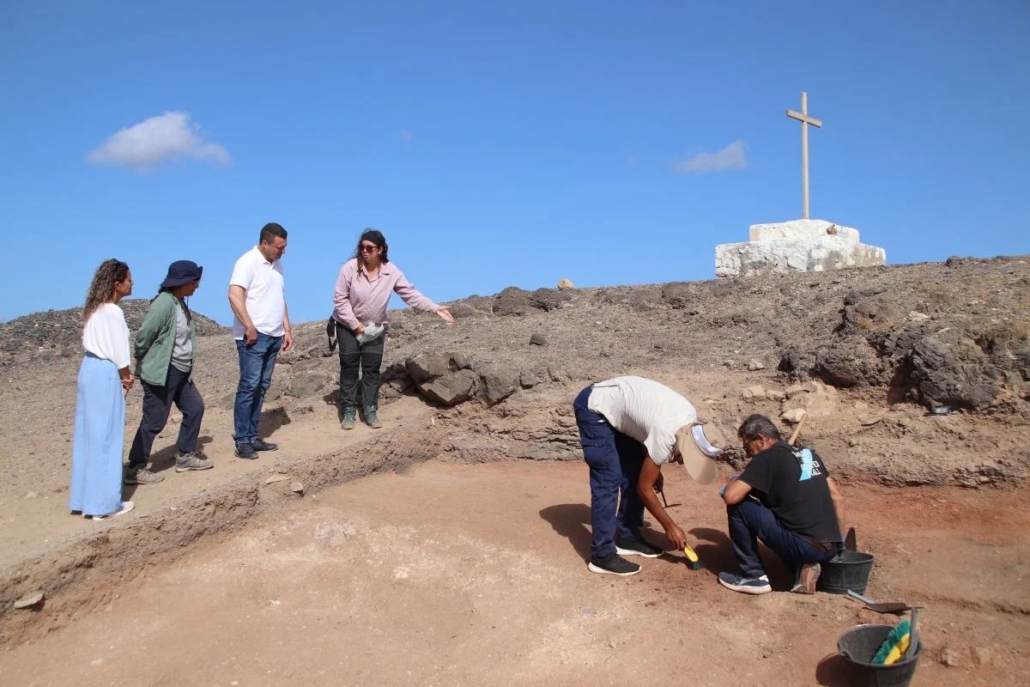
Four wells are already known, but historical sources suggest there could have been six or seven in total. The ravine under investigation was heavily exploited during those centuries, making it an important area for the archaeological team.
Several structures have been uncovered during the current campaign. Although researchers cannot yet confirm that they are wells, they have established that they are associated with water use.
New areas under investigation
Water-related structures are not the only focus of this year’s work. The archaeologists have decided against re-excavating areas investigated previously, including domestic dwellings and fortifications, opting instead to explore new spaces that may have served different purposes.
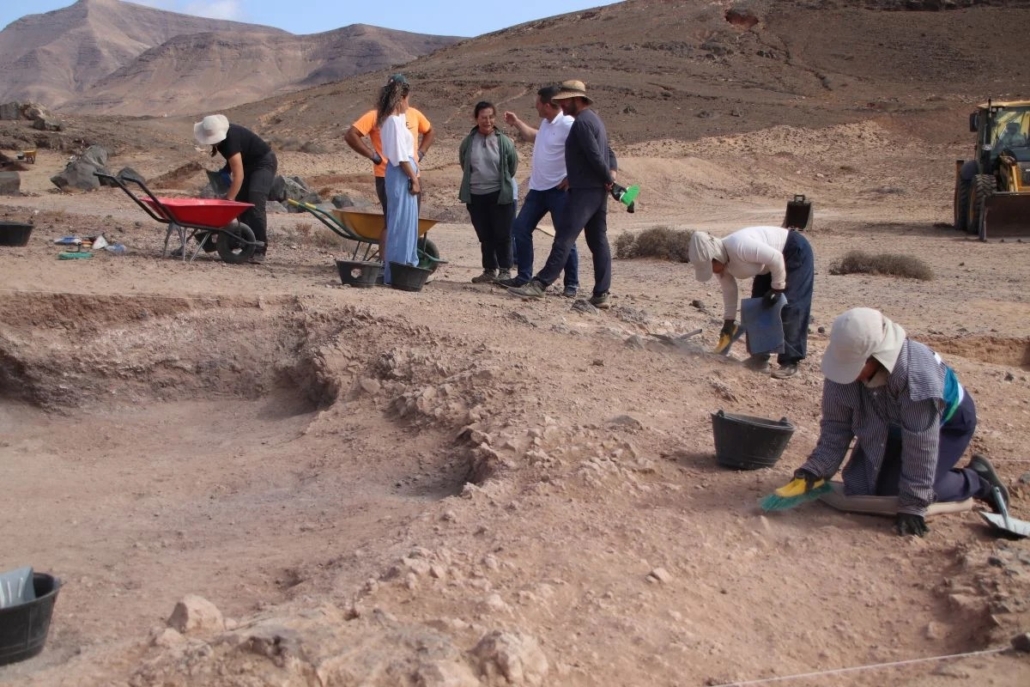
Following up on findings from geophysical surveys carried out during the first two years of the campaign, the team has uncovered an area used to store tools. The location may have served as a lime storage area associated with the lime kiln discovered two years ago.






Leave a Reply
Want to join the discussion?Feel free to contribute!