
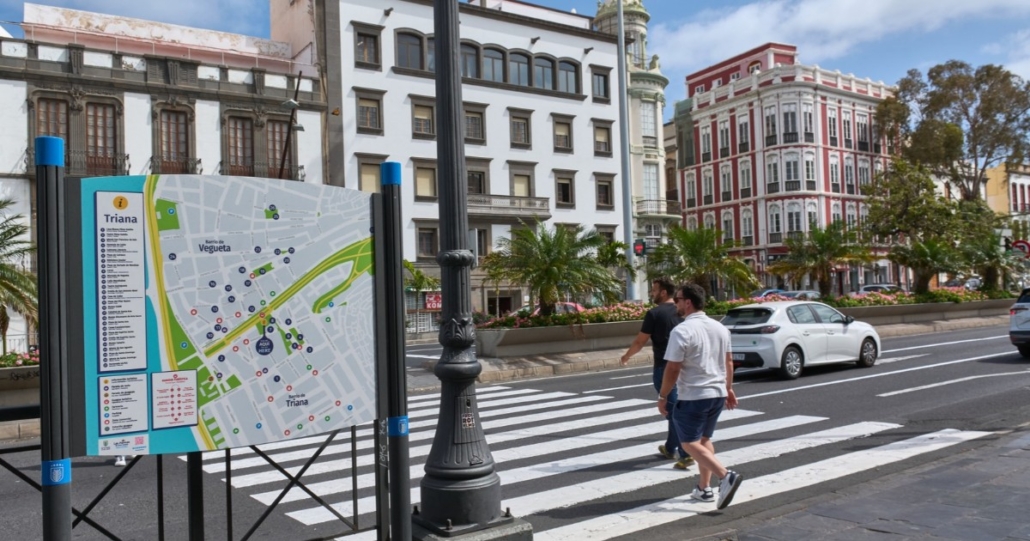
New Spanish traffic laws have been introduced on October 1st, providing greater protection for pedestrians and cyclists, and tightening up the rules on scooter use.
The new laws give greater priority to pedestrians in cities and towns. Motorists must give way to pedestrians at any crossing, whether it has traffic lights or not. They must also give way to pedestrians who are crossing the road when turning into a side street. On urban roads where the road and pavements are at the same level, pedestrians have absolute priority.
Traffic lights will no longer display an amber signal when a green pedestrian light is flashing. A red light will be shown instead at all times when pedestrians are permitted to cross.
Users of scooters, or other personal mobility vehicles, must be at least 15 years of age and wear a helmet. After dark, they must wear a reflective vest or similar reflective item.
On urban roads, cyclists should preferably ride in the middle of the road and cars must stay at least 5 metres behind them. Elsewhere, a motorist overtaking a cyclist must slow down to 20 kph less than the speed limit and maintain a lateral distance of 1.5 metres.
Motorcyclists are required to wear closed-toe footwear and protective gloves on interurban roads. when traffic is congested, they may only overtake on hard shoulders when they are marked, and at a maximum speed of 30 kph.
The new law also establishes the requirement for an “emergency lane”, obliging motorists in traffic jams on dual carriageways to clear a central space for emergency vehicles. This means that vehicles on the outer lane must move right while those on the left should move left.









Leave a Reply
Want to join the discussion?Feel free to contribute!