
Is it possible to live entirely on food produced on Lanzarote? If you want to keep it local and support island businesses, here’s how to go about it.

Lanzarote is a small island where agriculture is no longer as important as it used to be. But that doesn’t mean that food isn’t produced here. In recent years, farmers have greatly expanded their range of products.
• FRUIT AND VEGETABLES
There should be little problem with living on locally produced fruit and veg. Lanzarote’s onions and sweet potatoes are unmatched anywhere in the world, and market stalls will show the wide range of products available.
• BREAD AND CEREALS
These staple elements of many diets pose a problem when it comes to ingredients. While Lanzarote used to grow plenty of barley, wheat and maize, very little appears to be available now. As a result, the basic elements for bread, and even the Canarian staple of gofio, will not be 100% Lanzarote.
There are, however, plenty of bakers that produce fresh bread, and the old windmill in San Bartolomé is once again grinding high-quality gofio.
• PULSES
Lentils, chickpeas, peas and other pulses have been an important part of the island’s diet for centuries. In fact, you’ll find “Lanzarote lentils”, a popular strain developed on the island, in supermarkets all over Spain.
Pulses are no longer widely produced on the island, but you can still find them if you hunt around.
• DRINKS
There’ll be no difficulty celebrating with local alcoholic drinks. Lanzarote wine, made from locally grown grapes, is perhaps the island’s most famous product, and there are white, red, rosé and sparkling versions available. It also worth keeping an eye out for locally produced gins and vermouths.
Canarian beers such as Dorada and Troical are brewed elsewhere in the Canaries, but there are also at least four microbreweries on the island that brew excellent beers from imported ingredients. Bottled water is no longer produced on the island, but the tap water is perfectly safe.
• MEAT AND FISH
The most important local meats on Lanzarote are pork and goat, both of which are slaughtered at the abattoir in Maneje. Sheeps, cattle and rabbits are also available. These meats are sold at smaller butchers’ shops and local supermarkets such as chacón.
Fish is regularly caught off Lanzarote, and any fish counter will direct you towards local catches. It’s also worth going direct to source, at the Cofradias de Pesca in the harbours of Arrecife, Puerto del Carmen and Playa Blanca.
• DAIRY
Lanzarote’s goat cheese is widely available and well worth discovering. Sweet, mild queso fresco is a versatile, delicious Canarian product, while the sharp, tangy semicurados are a delight.
Goat’s milk and yoghurt is also available in certain outlets. Many outsiders are suspicious of goat’s milk, but that prejudice seems to derive from smelly French cheeses such as Roule de Chevre. In fact, goats milk is sweet, mild and delicious, and often preferred by those with lactose intolerances.
• OTHER PRODUCTS
Sea salt from Janubio is cheap and widely available, and Lanzarote has recently started to produce olive oil, although this is currently very expensive and sold more as a gourmet product.
Honey is produced on Lanzarote, as are local jams and preserves made from prickly pears and other fruits.
• SHOPPING LOCALLY
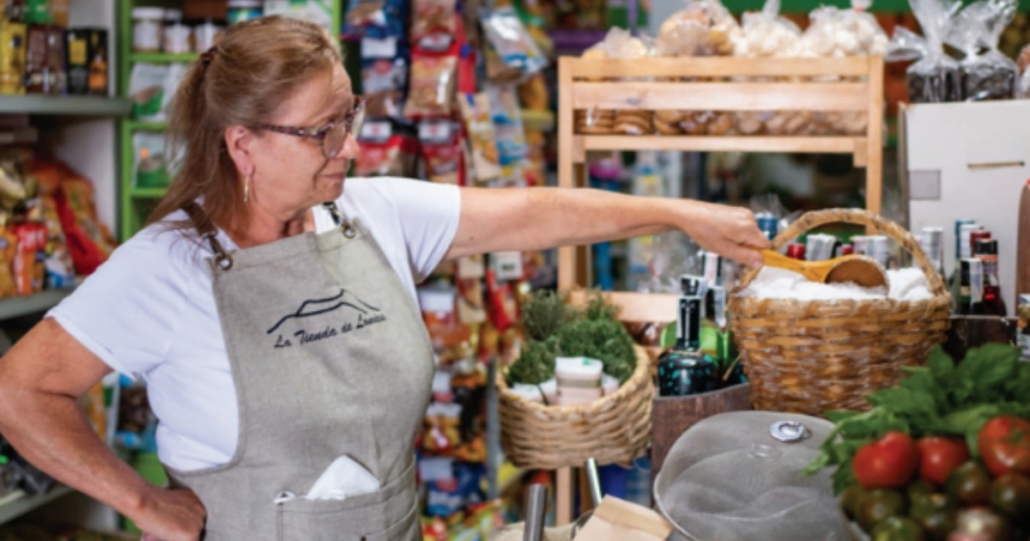
If you’re interested in buying local produce, it’s a good idea to shop small in local greengrocers, butchers, fishmongers and markets. The shopkeepers there will usually have a much greater knowledge of the provenance of products, and can make recommendations.
Shops such as Tías Fruit in Tías, Super Máguez in Puerto del Carmen, La Tienda de Lourdes in Soo and Frutas & Verduras in Playa Honda are the sort of establishments to look out for, and it’s also worth getting to know local markets such as the ones at Arrecife and Haría on Saturday morning (Haría’s covered market is also recommended) and Teguise and Mancha Blanca on Sunday.
Locally-owned supermarkets such as Chacón and Hiperdino are more likely to stock island products than big discount chains such as Aldi and Lidl.
It is, admittedly, difficult to live entirely on food produced in Lanzarote, but Canarian produce offers a much wider range.







Leave a Reply
Want to join the discussion?Feel free to contribute!