
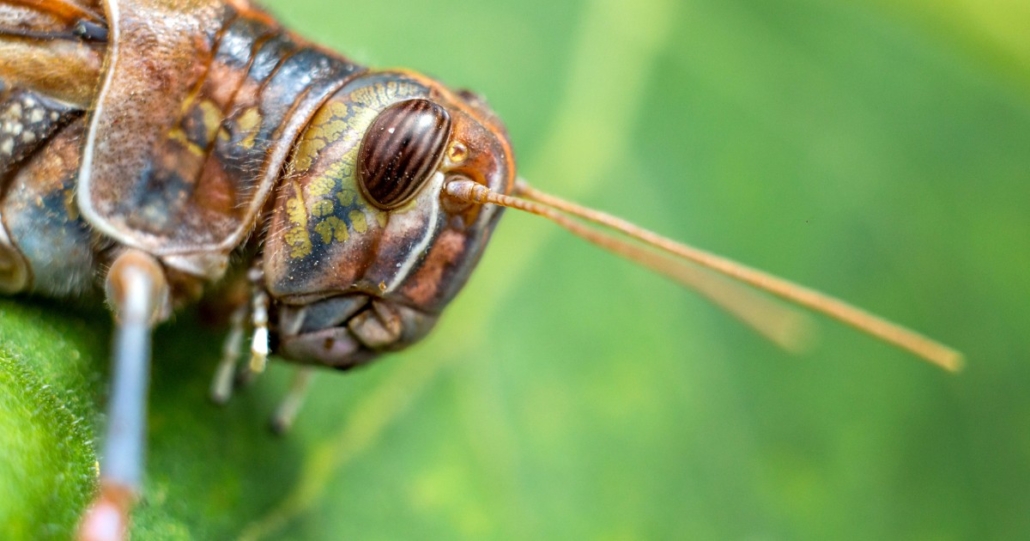
A swarm of locusts on Lanzarote made national news in late February, while hundreds of residents and tourists also had encounters with the large grasshoppers. And there may be more insect arrivals to come…
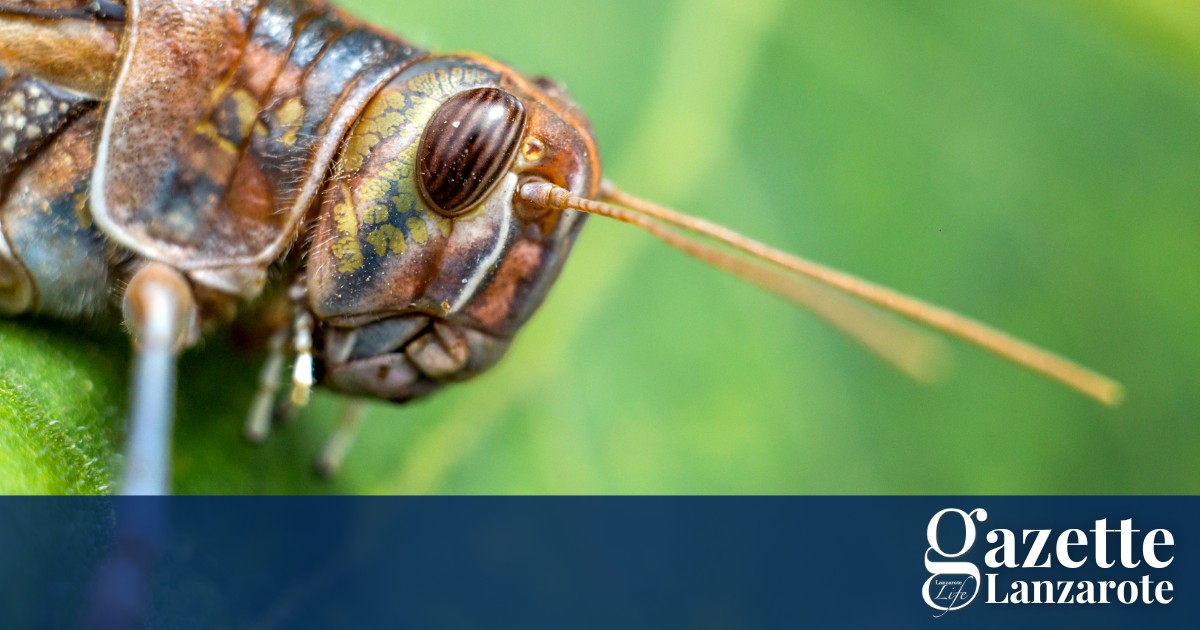
The heavy rains of December and January didn’t just fall on the Canary Islands. They also soaked vast tracts of the African mainland which had suffered several years of drought. When this happens, huge amounts of locusts can hatch, to feed on the greenery that the rains produce.
The resulting swarms can contain millions of insects and, when the wind comes from the east, these can be blown over towards the Canaries. Lanzarote last experienced a locust invasion in 2004, when several swarms arrived, and an earlier plague in 1958 caused genuine hardship as the locusts devoured crops.
This year, only one swarm was detected near Famara, but hundreds of residents and tourists also spotted individual locusts. The insects are totally harmless to humans, but still alarmed those who dislike creepycrawlies, while the island’s cats, lizards and birds had a wonderful time.
Just as in 2004, the locusts that arrived were adults, exhausted and nearing the end of their lives, and did not pose any serious threat to local crops.
But the wet winter hasn’t just favoured locusts. Lanzarote’s hillsides and meadows have burst into flower, and where there are flowers, there also insects. Ladybirds can often hatch out in large numbers on the island, or also be brought here from Africa, and large clusters can be found in sunny areas when they do.
Strangely, the pretty ladybird offers slightly more risk to humans than the terrifying biblical threat of locusts. They are usually regarded as a friend to farmers, preying on greenfly, but when they can’t find food, the pretty little beetles can also bite humans. Ladybird bites are rare, and usually harmless, but can provoke allergic reactions.
Butterflies can also appear on Lanzarote in immense numbers. The Monarch butterfly breeds locally on milkweed, which is a common native plant here, and can hatch out in large numbers, while the island has also seen large amounts of Painted Lady butterflies in recent years.
The explosion of insect life may make swallows and even swifts pause on their migratory journey north, and Lanzarote has also seen significant amounts of the colourful bee-eater bird arriving in springtime.








Leave a Reply
Want to join the discussion?Feel free to contribute!