
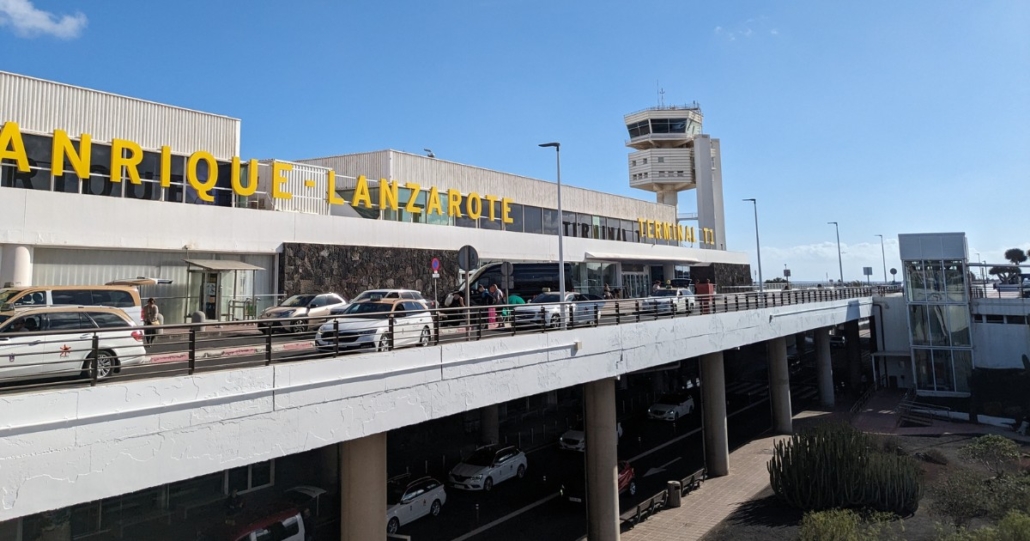
Aena has agreed to suspend its paid bus parking system at Canary Islands airports following talks with the regional government, island councils, and transport industry representatives.
The agreement was reached during a meeting on Tuesday at Tenerife South Airport, led by the Canary Islands’ Director General of Transportation and Mobility, María Fernández. The decision will allow time to review the system and adapt it to the specific operating conditions of the islands before any permanent changes are introduced.
Attending the meeting were representatives from Aena, the Tenerife and Lanzarote Cabildos, and the Federation of Transportation Entrepreneurs (FET). Together they agreed on a roadmap to assess the new access and parking system and identify any necessary adjustments.
Aena acknowledged concerns over how the scheme had been introduced and apologised for its implementation. The airport operator also confirmed that the proposed fees for bus waiting times will not be introduced in 2026.
Instead, the newly installed barriers will remain in place solely to gather operational data. That information will be used to evaluate the system before any charging measures are considered from 2027 onwards.
A monitoring committee will now meet in October, November, and December, bringing together Aena, the Canary Islands Government, all seven island councils, and representatives from the transport sector. The group will review the data collected and agree on any improvements before the system is fully implemented.
María Fernández welcomed the outcome, praising Aena’s willingness to pause the project and reconsider its approach.
“What matters is that a space for dialogue has been opened to analyse, using objective data, the best way to organise airport operations without harming public transport or mobility in the Canary Islands,” she said.
Fernández said the regional government had argued for months that any major changes should first be discussed through airport coordination bodies and with the participation of local authorities and the transport industry.
She stressed that the government supported efforts to improve airport operations but opposed the introduction of a nationwide policy without considering the unique circumstances of the Canary Islands.
Aena also committed to improving the designated waiting areas for buses by providing facilities including shaded areas and toilets to improve conditions for drivers.
Tenerife’s Councillor for Transportation, Eulalia García, said the Cabildo had opposed the measure from the outset, describing it as a unilateral decision that also affected public transport services.
She welcomed the agreement as an important first step towards finding a solution that reflects the airport’s operational needs while protecting public transport.
Lanzarote’s Councillor for Transportation and Mobility, Miguel Ángel Jiménez, also welcomed Aena’s decision to suspend the charges while discussions continue.
He said the proposed system had created operational difficulties for transport companies and affected mobility around the airport, adding that collaboration was the best way to develop a long-term solution.
The Federation of Transportation Entrepreneurs also welcomed the agreement. Its president, José Agustín Espino, said the coming months would provide an opportunity to improve airport operations before any final decisions are taken.
Industry representatives raised concerns over traffic congestion, longer waiting times, and the financial impact the proposed charges could have on transport operators. They argued that buses play a vital role in airport operations and that delays are often caused by airport processes beyond the control of transport companies.
The federation will now take part in the monitoring committee, contributing its experience to help develop a system that improves traffic flow without affecting the services provided by bus operators.









Leave a Reply
Want to join the discussion?Feel free to contribute!