
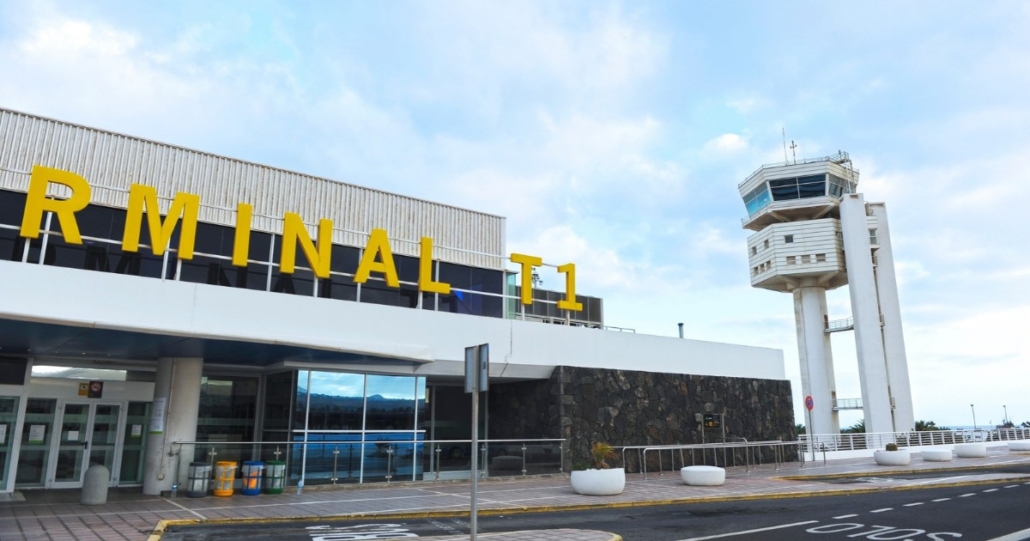
British travellers with hidden disabilities should apply for Aena’s invisible disabilities badge before flying through Lanzarote and other Spanish airports if they want access to designated family and reduced mobility security lanes.
UK travellers who use the Sunflower Lanyard are being reminded that it is not recognised by Aena as a way to access designated security lanes at Spanish airports.
Aena, which manages most of Spain’s airports, including Lanzarote Airport, operates its own system for identifying passengers with hidden disabilities.
Although the Sunflower Lanyard is widely used in the UK to indicate that someone may need extra time, support or understanding, Aena states that it cannot be used to access security checkpoints reserved for families and people with reduced mobility.
Instead, passengers who wish to use this provision should request Aena’s own invisible disabilities badge before travelling.
How to get Aena’s invisible disabilities badge
The badge is free and can be requested online through Aena’s official application page.
Travellers should be aware of the following requirements:
- Who can use it: People with hidden disabilities who may find busy, noisy or highly stimulating environments difficult.
- How to apply: Complete the request through Aena’s online application page.
- Cost: The badge is free.
- Validity: It can be used once, on the day of the flight, at participating Aena airports.
- How to present it: Passengers can show the badge in printed form or display it on their mobile phone.
- Travelling with family: Only one member of the travelling family group needs to carry the badge.
- When to display it: Passengers do not need to keep the badge visible throughout their time at the airport if they do not wish to.
The badge is designed to help airport staff recognise that a passenger may need additional time, support or understanding during airport procedures.
What benefits does the badge provide?
Showing the badge allows passengers to use the security checkpoint designated for families and people with reduced mobility, where available.
If an airport does not have a dedicated checkpoint, staff will facilitate access through general security as far as possible.
However, the badge is not a fast-track pass and does not guarantee personal assistance or exemption from airport security procedures. Passengers must still follow staff instructions and comply with all airport safety regulations.
Those who need help navigating the airport or reaching their departure gate should separately request Aena’s Sin Barreras assistance service.
Which Spanish airports accept the badge?
Aena currently lists the following airports as accepting its invisible disabilities badge:
- Adolfo Suárez Madrid-Barajas
- Alicante-Elche Miguel Hernández
- Bilbao
- César Manrique-Lanzarote
- Fuerteventura
- Girona-Costa Brava
- Gran Canaria
- Ibiza
- Región de Murcia International
- Josep Tarradellas Barcelona-El Prat
- Málaga-Costa del Sol
- Menorca
- Palma de Mallorca
- Reus
- Seville
- Santiago-Rosalía de Castro
- Tenerife Norte-Ciudad de La Laguna
- Tenerife South
- Valencia
- Vigo
The scheme is particularly relevant to passengers travelling to and from the Canary Islands, including Lanzarote, Tenerife, Fuerteventura and Gran Canaria.
What about the UK Sunflower Lanyard?
Aena acknowledges the Sunflower Lanyard as a widely used form of identification developed by private initiatives and associations.
However, the company makes clear that wearing one does not grant access to security checkpoints designated for families and passengers with reduced mobility.
UK travellers who already use a Sunflower Lanyard can continue to wear it, but should not assume it will provide the same access arrangements at Spanish airports.
Applying for Aena’s badge in advance is the recommended way to access the benefits of its scheme.








Leave a Reply
Want to join the discussion?Feel free to contribute!