
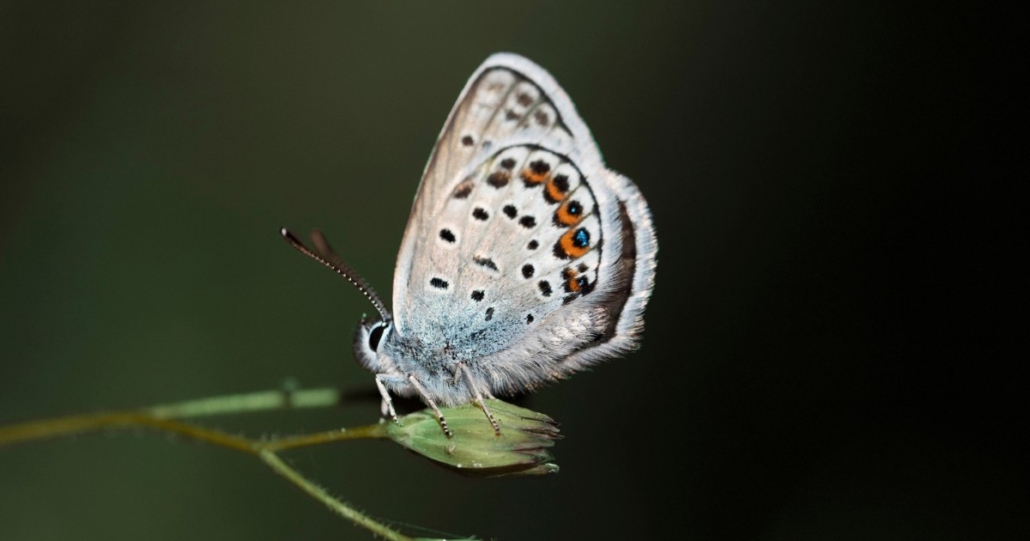
A walk of little more than an hour across Islote del Mojón is enough for biologist Rosa Betancort to count around 80 butterflies. This small island of ancient terrain, surrounded by lava flows in Timanfaya National Park, provides an important refuge where native plants offer food and breeding sites for these vital pollinators.
Since 2019, Timanfaya National Park has taken part in the National Parks Network’s butterfly monitoring programme. Surveys are carried out twice a year, during spring (March to June) and autumn (September and October), at Montaña de Mazo and Islote del Mojón.
Although Timanfaya is Spain’s only national park dominated primarily by geological features, it supports a remarkable butterfly population. The most frequently recorded species is the painted lady (Vanessa cardui), accounting for almost 80% of all observations, followed by Polyommatus celina and Colias crocea.
The painted lady is renowned for one of the longest migrations undertaken by any butterfly. At the end of summer, it begins an extraordinary journey of around 12,000 kilometres, travelling from Europe across the Mediterranean and the Sahara Desert to tropical Africa. Unlike migratory birds, the journey is completed over six generations, with each generation reproducing at successive stopovers. During winter, the species remains in the Canary Islands and sub-Saharan Africa before its descendants return to Europe as temperatures rise.
One of the Canary Islands’ most widespread butterflies, the painted lady is distinguished by its orange and pink upper wings and the brown-and-white pattern on its hindwings, marked with four small bluish eye spots. Its caterpillars feed on plants including small-flowered mallow (Malva parviflora), mouse-ear hawkweed (Forsskaolea angustifolia) and grapevine (Vitis vinifera), while adults obtain nectar from as many as 40 different flowering plants.
Betancort explains that rainfall is crucial to their survival. “In a year without rain, the plants where butterflies complete their reproductive cycle don’t grow. Adult butterflies feed on nectar, water and minerals from the soil – it’s common to see them gathering minerals from damp ground – but caterpillars feed exclusively on leaves.”
Because butterflies are highly sensitive to environmental changes and pollution, they are considered valuable indicators of ecosystem health. Healthy butterfly populations reflect healthy habitats, while the insects themselves are an important food source for many bird species.
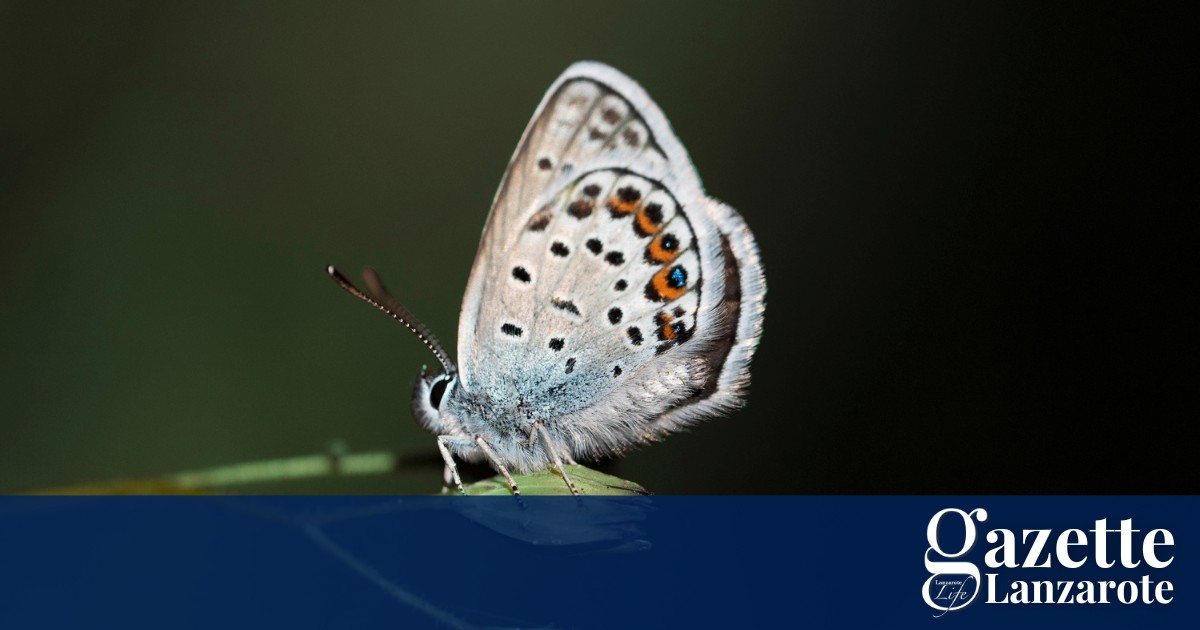
The second most common species recorded in Timanfaya is Polyommatus celina, a butterfly found only on Lanzarote and Fuerteventura. Males display a brilliant violet-blue colour to attract females during mating. Its larvae feed on native plants including milk vetch (Astragalus solandri), Lanzarote lotus (Lotus lancerottensis) and field clover (Trifolium campestre).
The third most abundant species, Colias crocea, is easily recognised by its bright yellow wings edged with a dark border. Its caterpillars feed primarily on Lanzarote lotus (Lotus lancerottensis).
“Butterflies are recognised by their colour patterns and wing markings,” Betancort says. “Once contact is established, the pheromones emitted by the male play a decisive role in reproduction.”
Their delicate wings are covered with thousands of tiny scales that overlap like roof tiles, creating distinctive patterns used for camouflage and attracting mates. These scales are easily damaged through handling, which can affect the butterfly’s ability to survive. For that reason, experts recommend observing butterflies from a distance and allowing them to continue their journey undisturbed.





Leave a Reply
Want to join the discussion?Feel free to contribute!