
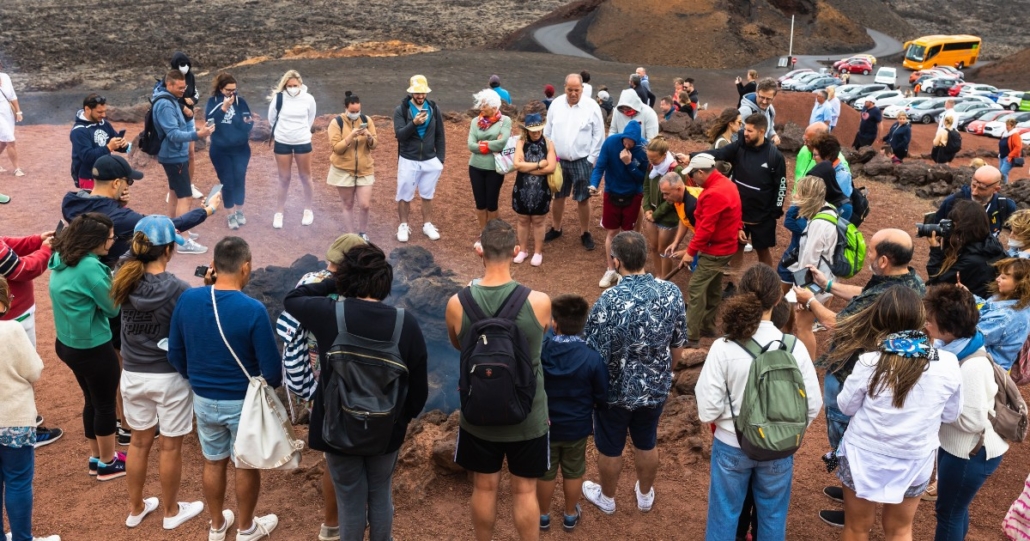
A new study published by the British Ecological Society has warned that the growing number of tourists visiting Lanzarote is placing increasing pressure on protected natural spaces, potentially threatening their long-term conservation.
The research was carried out by scientists from the Universities of Helsinki and Jyväskylä in Finland, Germany’s University of Kassel, and the University of Las Palmas de Gran Canaria. The team analysed more than 723,000 geolocated photos shared on Flickr between 2004 and 2022 to understand how tourists interact with nature across the archipelago.
According to the study, nature plays a major role in attracting visitors to the Canary Islands, with tourists increasingly exploring protected landscapes beyond the traditional sun-and-beach holiday experience. Researchers also highlighted the influence of social media in shaping visitor expectations and driving tourism towards environmentally sensitive areas.
Lanzarote Dominates the Ranking of Popular Protected Areas
The study found that seven of the twenty most photographed protected areas in the Canary Islands are located in Lanzarote.
Among the most popular was the Parque Natural del Archipiélago Chinijo, ranked as the third most-visited protected area in the Canary Islands on Flickr, with 1,720 shared images. Parque Natural de Los Volcanes followed closely in fourth place with 1,591 photos.
Other Lanzarote protected areas featured prominently in the ranking, including:
- The Bocayna Strait between Lanzarote and Fuerteventura (971 photos)
- La Geria (905 photos)
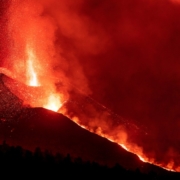
- Timanfaya National Park (784 photos)
- The eastern and southern Lanzarote scientific interest site protected under European regulations (764 photos)
- Los Ajaches (615 photos)
Researchers noted that 25% of all geotagged photos uploaded in the Canary Islands contained nature-related content, and 75% of those were taken inside protected areas.
Tourist Nationality Influences Nature Preferences
The study also revealed significant differences in how visitors from different countries interact with natural environments.
Spanish and German tourists, along with travellers from Central Europe, were the most likely to post nature-related photographs. In contrast, British and Nordic visitors shared fewer nature-focused images overall.
British tourists were found to favour coastal scenery most strongly, while arid volcanic landscapes ranked as their second preference. German visitors, meanwhile, showed a stronger preference for the greener and more forested islands such as La Gomera, Tenerife, Gran Canaria, and La Palma.
Concerns Over Conservation and Overtourism
Researchers warned that balancing tourism with environmental protection will become increasingly challenging if visitor numbers continue to rise.
The report cautions that protected natural areas could follow the same path of “tourism commodification” already experienced in more heavily developed parts of the islands.
The study also examined possible management measures, noting that restrictions such as entrance fees or permit systems can help reduce environmental damage caused by large visitor numbers. However, the authors warned that these measures could also limit the social and recreational role of protected areas.
The researchers concluded by calling for “flexible, participatory and multi-level approaches” that combine environmental conservation with sustainable recreational use of natural spaces.





Leave a Reply
Want to join the discussion?Feel free to contribute!