
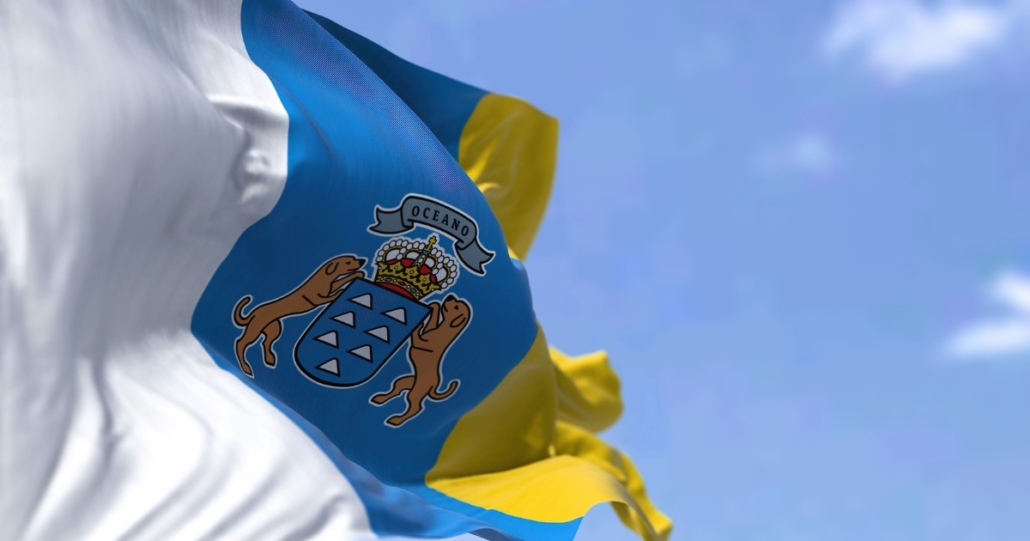
May 30th is Canary Islands Day, a public holiday on all of the islands and a time when the culture and history of this unique archipelago is celebrated.
Of course, for many of us who live here, every day is Canary Day, but May 30th offers a special chance to enjoy the good things that this immensely varied string of eight islands has to offer.
HISTORY
In 1402, French mercenaries working for the Spanish Crown landed near Playa Blanca on Lanzarote, starting a process of colonization that would eventually extend to most of the Americas.
The natives of the islands at that time were tribes known as Mahos and Guanches, who had arrived over a thousand years earlier from north Africa.
For over 500 years since the Spanish conquest in the 15th century, the Canary Islands were ruled directly by Spain. That changed on May 30th, 1983, with the first sitting of the Canarian Parliament – a government elected by islanders.
CLOTHING
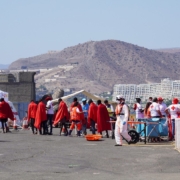
One of the main things you’ll notice on Canarian Day is traditional dress. This is often worn by shop assistants, and schoolchildren are usually encouraged to dress up for the celebrations, too. The clothes are also worn during fiestas and romerías (pilgrimages). Although there are more elaborate ancient costumes, the most common style of traditional dress reflects the garments worn by field workers in bygone times.
Women wear full skirts, aprons, long-sleeved blouses and bonnets or palm-woven hats, and often add a laced bodice or a headscarf. Men, meanwhile, sport a combination of highwaisted long trousers, collarless shirt, waistcoat, sash and a dark felt sombrero.
These clothes are designed to be practical and, above all, to protect the wearer from the Canarian sunshine.
MUSIC
Canarian folk music features stringed instruments such as guitars, mandolins and the tiny timple, a local instrument whose piercing sound is the signature sound of the islands.
Other instruments include aboriginal percussion instruments such as the lapas (limpet shells used as castanets) and various drums and flutes. Singing is often performed in groups, with powerful, full- throated soloists often taking centre stage.
There are three main genres – the lively isa; the courtly folía, derived from ancient Spanish fandangos and boleros; and the solemnly beautiful malagueña. You’ll hear the sweet sounds of Canarian folk music everywhere around Canary Day.
FOOD AND DRINK
Food is always a part of Canary Day, when local dishes such as papas arrugadas, mojo sauces and the staple toasted maize meal called gofio take centre stage.
Fresh and dried fish, fruits, vegetables and dairy products are all an essential part of the diet of the islands, and celebratory meals such as the one-pot sancocho (fish stew) or puchero (meat stew) are often served. The aroma of the marinated pork that is grilled for carne fiesta will permeate the air, and, of course, there’ll be plenty of locally produced wine to help the celebrations along.
SPORTS AND PASTIMES
Canarian wrestling is the most popular Canarian sport, a noble and ancient form of combat that takes place in sandy arenas.
Other pastimes that date back to pre-conquest times include palo, a martial art using wooden staffs, and the salto de pastor, a spectacular method of descending from steep hillsides by planting a long wooden stick and sliding down it.
Other sports and games have arrived from Europe and developed local variations, such as Canarian bowls, vela latina sailing and handball.
EVENTS
Every municipality and major town on Lanzarote will hold celebrations for Canary Day. These usually involve folk concerts, exhibitions of local sports and food tastings. However, details are not usually published until fairly close to the day itself, so keep an eye on www.gazettelife.com for updates.



Leave a Reply
Want to join the discussion?Feel free to contribute!